Showing posts with label Israel. Show all posts

Sunday, December 22, 2019

A Response to "The Wall" (a.k.a "the Separation Barrier")

During my time in Chicago, an annual tradition was the Good Friday Justice Walk.

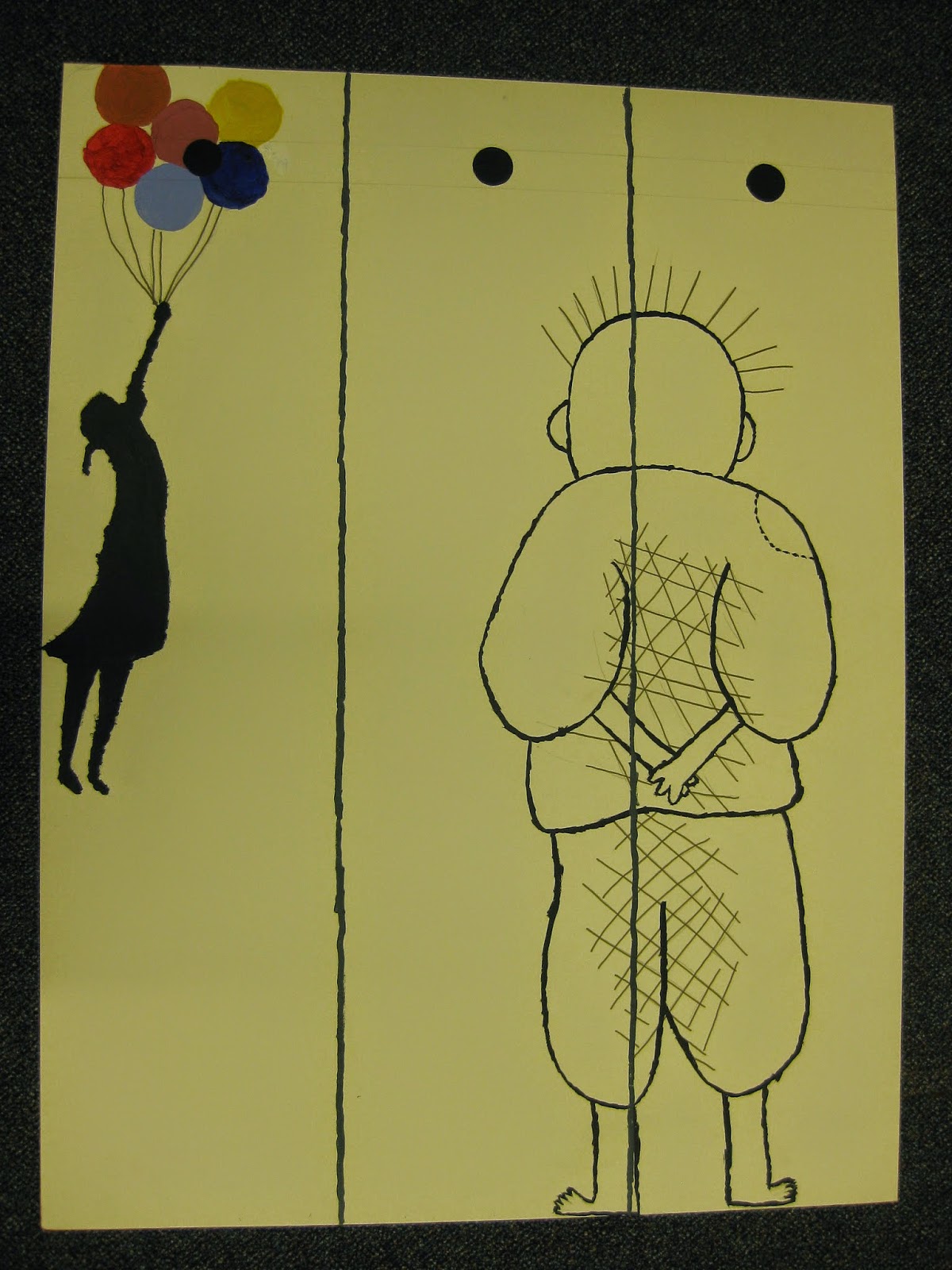
In 2014, the group of Palestine solidarity activists I worked with did a project to help people learn about and imagine the impact of the Wall (also known as the Separation Barrier) in Israel.

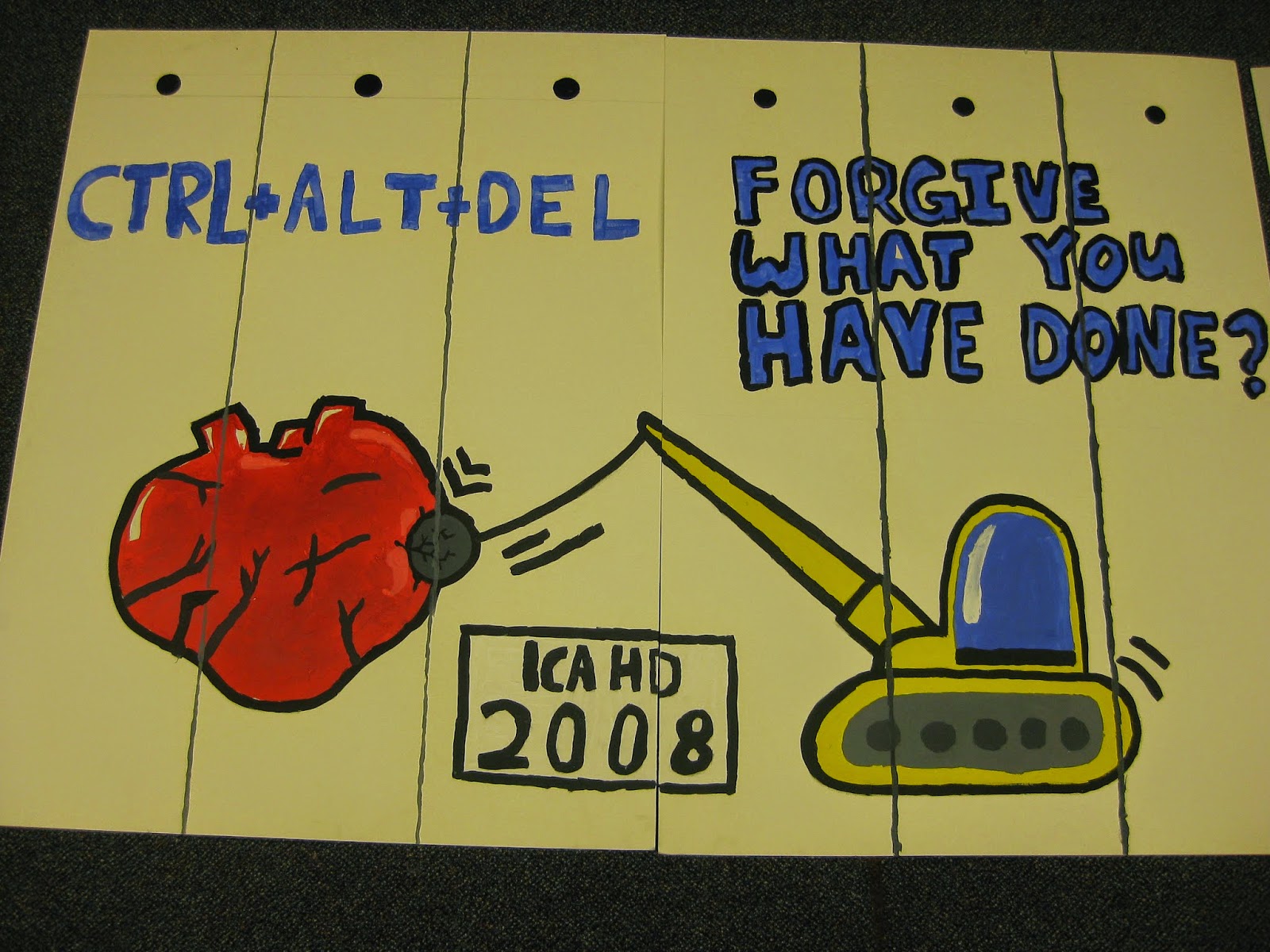
Palestinians and visitors from throughout the world have added their own street art, graffiti, and public art to the Wall, as a sign of protest, an invitation to peace, and a critique of the lack of global intervention. Our project consisted of making a series of posters that replicate the art on the Wall. Here's an example:


(I first became sensitized to the importance of wall-art-that-protests-the-wall -- the power of art to demand a new, liberated reality -- in an essay my sister wrote about the Berlin Wall in the late 1980s.)

I have posted photos of the other wall boards we created below.

When placed side-by-side, the boards created a replica (in miniature) of the barrier wall:


"The Women Weep" in the shadow of the containment wall
34th Annual 8th Day Good Friday Justice Walk in Chicago


You can read about the project on the blog of the ELCA Metro Chicago Synod Working Group on the the Middle East.

The project had important "before" and "after" aspects, too.

Making the boards was half the fun. Check out these photos of the "Wall" sign board painting workshops - March and April 2014

. . . and . . . several months after the event, Chicago area readers of the Evangelical Lutheran Church in America (ELCA) publication The Lutheran got to read about the project in that publication (see image at right).

In 2015, I had a chance to see the barrier wall in person. It left me with an ineradicable determination that every Christian needs to become devote to the in-this-world work of liberation.


Resistance art on the wall -- Aida refugee camp, Palestine


Full set of photos
The Wall: posters created by the ELCA Metro Chicago Synod Working Group on the the Middle East for the Good Friday Justice Walk in Chicago in 2014.


"Now that I've seen it I'm responsible for it."


"U.S. aid: injustice anywhere is a threat
to justice everywhere. (MLK Jr.)"


"The wall is lame."


"An eye for an eye leaves the whole world blind."


Hope


"ctrl + alt + del ... Forgive what you have done? ... ICAHD 2008"


"A country is not only what it does. It is also
what it tolerates. Kurt Tucholsky 1933"


"War is not the answer."


"Your heart is a weapon the size of your fist.
Keep fighting.
Keep loving."


"I am not a terrorist."

Sunday, April 30, 2017

(Most of) The Mideast Wants a Nuclear-Weapons-Free World

MIDEAST:
Which countries are giving the green light to #nuclearban?
(Please share this message on Twitter.)


An important component in the global effort to achieve a total ban on nuclear weapons is the commitment of (most of) the countries in the Middle East.

The map reproduced above is from the ICAN Austria interactive map of countries supporting the nuclear weapons ban negotiations at the UN. The countries marked with a green dot support a nuclear ban.

The situation in the Middle East is suggestive of the larger global effort to ban nuclear weapons. Efforts for a nuclear weapons-free zone in the Mideast have been thwarted for years. Now the supporters have joined together with the global effort to ban nuclear weapons worldwide. See:

Wikipedia: Middle East nuclear weapon free zone

Wikipedia: Haifa International Conference for a WMD-Free Middle East

"Netanyahu thanks US for blocking push for Middle East nuclear arms ban."

You can help get the word out about the efforts of all these nations to bring about a world free of nuclear weapons by sharing messages like the ones below on social media (and by creating your own!).


Thank you #BAHRAIN.
(Please share this message on Twitter.)


Thank you #CYPRUS.
(Please share this message on Twitter.)


Thank you #EGYPT.
(Please share this message on Twitter.)


Thank you #IRAN.
(Please share this message on Twitter.)


Thank you #IRAQ.
(Please share this message on Twitter.)


Thank you #JORDAN.
(Please share this message on Twitter.)


Thank you #KUWAIT.
(Please share this message on Twitter.)


Thank you #LEBANON.
(Please share this message on Twitter.)


Thank you #LIBYA.
(Please share this message on Twitter.)


Thank you #OMAN.
(Please share this message on Twitter.)


Thank you #QATAR.
(Please share this message on Twitter.)


Thank you #TUNISIA.
(Please share this message on Twitter.)


Thank you #UAE.
(Please share this message on Twitter.)


More memes to share: 133 Is a Lot of #Nuclearban-Supporting Countries


Please share this post . . . . 

Wednesday, November 2, 2016

Who would possibly vote "NO" to banning nuclear weapons???

Of particular interest when the UN vote was taken - the actions of USA, Russia, China, India, Pakistan, Iran, North Korea ... and Japan.


Vote on resolution to negotiate a ban on nuclear weapons in 2017 (L-41)
Green - Yes (123, 76%)
Red - No (38, 24%)
Beige - Abstained
(Via @ILPIwmd - share on Twitter)


"What do you notice . . . ?"

If I were lucky enough to be a high school or college teacher, I would seize the opportunity to invite my students to investigate a real life moment in global politics.

Last Thursday, the United Nations General Assembly voted overwhelmingly to proceed with negotiations in 2017on global nuclear disarmament - a worldwide ban on nuclear weapons.

It is a stunning lesson in global civics to observe who voted "YES" and who voted "NO" (and also who abstained) on L.41 - "taking forward multilateral nuclear disarmament negotiations."


ROLL CALL: votes on "taking forward multilateral
nuclear disarmament negotiations"


The assignment is simple: Pick a country ... guess how you might expect them to vote, giving reasons for your answer ... then look at how they really voted.  Next, try to think about additional reasons that might explain their actual vote. Final step: go online and see what others are saying about why the country voted the way they did.

This will prove to be a very illuminating exercise for anyone -- young or old -- who thinks they know which countries are working for the peace and safety of the world.

More information at on Common Dreams: "US Votes 'No' As UN Adopts Landmark Resolution Calling to Ban Nuclear Weapons"


For instance, see . . . 

133 Is a Lot of #Nuclearban-Supporting Countries

Tlatelolco 50: A Gift to the World

SCIENCE MARCHES: Are All These Countries In the Dark About Nuclear Weapons?

VIETNAM and the NUCLEAR BAN: Out From Under the Shadow of US Nuclear Terror

Why People Want a Pacific (and World) Free of Nuclear Weapons

A Peace-building Commonwealth Wants to Ban Nuclear Weapons
and The Road to the Commonwealth Games Passes Through #Nuclearban Territory

NUCLEAR WEAPONS BAN TALKS: With Japan at the Table (Hopefully)

NOWRUZ: New Day for a World Without Nuclear Weapons

China DOES Have a Role in the Nuclear Ban Movement

USA: Bringing a Trumpian Posture to the Nuclear Ban Talks. (Bankruptcy.)

North Korea and #NuclearBan

(Most of) The Mideast Wants a Nuclear-Weapons-Free World

Where Will Europe Stand on #Nuclearban?


Additional resources

"Standing With the Nonwhite World to Ban Nuclear Weapons" by Vincent J. Intondi: "It is no surprise that this current attempt to eliminate nuclear weapons is being led by many nonwhite nations. In 1955, ten years after the atomic bombings of Hiroshima and Nagasaki, twenty-nine nations of Asia and Africa gathered in Bandung, Indonesia . . . "

"Nuclear weapons and the dialectic of universalism: the UN convenes to ban the bomb" by Kjølv Egeland: "[T]he nuclear ban-treaty movement marks the first time an instrument of international humanitarian law is forced into existence against a kicking and screaming European core. The civilising mission of normative stigmatisation has been taken up by those formerly on the receiving end."

 . . . and links to more helpful explanations on the "Full voting result on UN resolution L.41" page on the ICAN website.


More related posts

How do you formulate a statement that can somehow convince the United States to eliminate its threatening nuclear weapons?  How do you formulate the 10th request? Or the 100th? Knowing all the time that the United States is in the position -- will always be in the position -- to say, "No" ?  At what point does it dawn on you that the United States will never give up its nuclear weapons, because it has the power and the rest of the world doesn't?

(See 360 Degree Feedback in New York (2014 NPT Prepcom and How the World Views the United States))


Hibakusha is a word that has traditionally been used to refer to people affected by the nuclear blasts in Hiroshima and Nagaski.  It is now being broadened to recognize the many additional victims of acute affects of nuclear radiation (including fallout from tests and radioactivity from mining and processing). In fact, we are all subject to the impact and threat of nuclear radiation spread indiscriminately by nations and corporations.

(See HIROSHIMA: What does it mean to say, "We are ALL 'hibakusha'?")


"It's not enough to remember this just once a year; it's not enough that we make a single book -- Hiroshima -- required reading, and never go beyond that. There should be a whole canon that people study progressively, year by year, to grasp and retain the horror of this."

(See FIRE AND BLAST: A Curriculum that Confronts Nuclear Danger?)

Saturday, August 27, 2016

ELCA Resolution on Palestine / Israel: What Does It Mean for Us?

The Evangelical Lutheran Church in America (ELCA) has passed a resolution concerning justice in Palestine / Israel. What should Lutherans do?


ELCA delegation visits the Dome of the Rock in Jerusalem
during January 2015 pilgrimage to the Holy Land.  
(Details at Metro Chicago Synod Working Group on Middle East site.)


I was at a meeting yesterday and we were discussing the upcoming trip of some church folk to the Holy Land, and the question came up: "How will their plans change to reflect the resolution on Palestine / Israel passed at the ELCA churchwide assembly a couple of weeks ago?"

In particular, the ELCA resolved: "To urge this church’s members, congregations, synods, agencies and presiding bishop to call on their U.S. Representatives, Senators and the Administration to take action requiring that, to continue receiving U.S. financial and military aid, Israel must comply with internationally recognized human rights standards as specified in existing U.S. law, stop settlement building and the expansion of existing settlements in East Jerusalem and the West Bank, end its occupation of Palestinian territory, and enable an independent Palestinian state" (Emphasis added - read the full resolution below.)

The simple answer, of course, is "read the resolution, think about it, pray about it, discuss it with others (inside and outside your church community), and act faithfully."

Here are a few more specific suggestions for people to think about in the months ahead:

The next few months . . .  As you gather with other congregants returning from the summer and starting the fall season of gatherings and activities, ask, "Have you read the resolution? What does it mean to you? What are we called upon to do?"

Advent and Christmas - As we think about what it meant that God responded to our expectations by entering the world in the flesh, consider how to take up the words of the resolution concretely. What does this have to do with the here and now? Can we relish what happened in Bethlehem two thousand years ago without being deeply concerned about, and taking action on, what's happening in the lives of real people living in Bethlehem today?

Time after Epiphany - For many of us in the US, this time is referred to as "those long winter months." Take the time to read a book that sheds light on the ELCA resolution. (How about Faith in the Face of Empire by Mitri Raheb?)

Lent and Easter - A time to repent -- "turn around." Join with others in your congregation, conference, synod, and churchwide, as well as those of other church bodies and other faiths to carry out a brand new behavior toward Palestine / Israel. Move from just being "with them in spirit" to being with them in practice.

Time after Pentecost (know to some as "summer vacation") - Will you be traveling to Palestine / Israel next summer? Consider how your itinerary and trip objectives will faithfully respond to the ELCA resolution.

The suggestions above are just food for thought.  Other suggestions? Add them as comments below!


Related posts

Can there be any more clear illustration than the one at left to remind us that the work of the Church is liberation?

(See Christian "Church"? How about Christian "Liberation Organization"? )


Just imagine the effect of qualifying the usual blanket statements about "what Jews think" or "what Jews say" with specifics about which Jews are under discussion. I believe 2015 will turn out to be the year that people everywhere begin to tease apart the the notions of "Jewish" and "unconditional supporter of Israel."

(See The End of the Myth of Monolithic Jewish Support for the Actions of the Israeli State )


To be sitting in Berkeley and seeing in front of my eyes the spreading of this idea that started in Texas and was nurtured in Philadelphia and got agitated in Chicago felt like a real Pentecost moment.


(See Decolonize Lutheranism -- A Northern California Installment) 


Full text - Evangelical Lutheran Church in America (ELCA) resolution on Palestine / Israel - August 2016 
(retrieved from http://download.elca.org/ELCA%20Resource%20Repository/Legislative_Updates_for_the_2016_Churchwide_Assembly.pdf on August 27, 2016)

ASSEMBLY ACTION
YES-751; NO-162
CA16.05.13

To receive with gratitude the memorials of the Northwest Washington, Sierra Pacific, Southwest California, Rocky Mountain, Minneapolis Area, Southwestern Texas, Southeastern Iowa, South-Central Wisconsin, Southeast Michigan, Indiana-Kentucky, Metropolitan New York, Northeastern Pennsylvania, Upper Susquehanna and West Virginia-Western Maryland synods related to Israel and Palestine;

To reaffirm the commitment of this church to:

1. Continue its awareness-building, accompaniment, and advocacy on behalf of a peaceful resolution of the conflict between Israel and Palestine;
2. Take steps to assist the Evangelical Lutheran Church in Jordan and the Holy Land (ELCJHL) and other Christians in sustaining their endangered presence in the Holy Land;
3. Promote the economic empowerment of Palestinians, including investment in Palestinian projects and businesses;
4. Promote the protection of the human rights of Palestinians and Israelis and oppose all violence and actions which discriminate against or deny any people their basic freedom, dignity or human rights;
5. Embrace the principles of restorative justice as part of the ELCA’s advocacy and engagement for the just resolution of the Israeli-Palestinian conflict and actively seek ways to support Palestinians and Israelis engaging in restorative justice dialogue and other projects; and
6. Continue to pray for the ELCJHL and the work of The Lutheran World Federation Jerusalem program;

To encourage this church’s members, congregations, synods, and agencies as well as the presiding bishop to call on the U.S. President, in coordination with the United Nations Security Council, to offer a new, comprehensive and time-bound agreement to the governments of Israel and Palestine, resulting in a negotiated final status agreement between Israel and Palestine leading to two viable and secure states with a shared Jerusalem;

To urge this church’s members, congregations, synods, agencies and presiding bishop to call on their U.S. Representatives, Senators and the Administration to take action requiring that, to continue receiving U.S. financial and military aid, Israel must comply with internationally recognized human rights standards as specified in existing U.S. law, stop settlement building and the expansion of existing settlements in East Jerusalem and the West Bank, end its occupation of Palestinian territory, and enable an independent Palestinian state; and

To encourage this church’s members, congregations, synods, and agencies to call on the U.S. President to recognize the State of Palestine and not prevent the application of the State of Palestine for full membership in the United Nations.

Monday, May 9, 2016

SMART MONEY: $3.5 Billion Wants Answers from Boeing on Israel

Boeing has an Israel problem . . . and that
means Chicago has a Boeing problem
Boeing's shareholder meeting on May 2, 2016, revealed that people holding $3.5 billion in Boeing stock said they want the facts on Boeing weapons sales to Israel.

The way Boeing spun the story last week, "only" 5% of shareholders voted in support of a shareholder resolution calling on the company to detail their military sales to Israel.

But when you do the math, that 5% of the 300 million shares outstanding -- even if you only count the 88% of the total that Boeing says was actually voted -- is worth $3.5 billion (at the current Boeing share price).

That means people (including a lot of institutional investors, to be sure) who hold $3.5 billion in Boeing stock said, "YES: we want the facts on Boeing weapons sales to Israel."


Boeing 2016 stockholder meeting:
"Murder from a distance is still murder."
"Boeing: No arms to Israel."
"Boeing products kill kids. Divest this death tech stock."
(Photo: Chicago Monitor)


According to the Antiwar Committee Chicago,

Israel recently completed its largest arms deal with the U.S., to purchase almost $2 billion in missiles, bombs, and guidance systems for bombs. Boeing manufactures most of the components of these, including the guidance systems that turn regular bombs into “smart bombs.” A report by Amnesty International – UK showed that the bombings which caused the most casualties in Gaza came from Boeing’s laser guided, one ton bombs, the MK-84/GBU-31. Israel is purchasing 10,000 of these smart bomb kits.

(See "5% of Boeing Stock Holders Vote for Resolution Challenging Arms Sales to Israel")

Palestinian rights - a big issue in Chicago
This story is especially interesting to me because I attended a conference on Boycott, Divestment, Sanctions (BDS) in Santa Cruz just days before the Boeing meeting. What I learned there is that (a) the BDS strategy to bring international pressure on Israel to end its occupation of Palestine is succeeding; and (b) there is no an established sequence of escalation that BDS successes follow. The five percent vote at the Boeing shareholder meeting is a clear stepping stone to a success in the Boeing campaign.

The events at Boeing are also inspiring in light of what I wrote recently after viewing the film about US weapons sales, Shadow World. So many places in the US just sit back and accept the fact that their home is profiting from war. Apparently, people in Chicago are different.

I can't wait to see what happens next at Boeing.


Other related posts

BOEING: "Breaking Up Is (Is Not) Hard to Do"

Which Boeing Are We Talking About Again?

Campaign Against the Boeing Killer Drone Program

August 16-17, 2014: Protest U.S. Kidnapping, Torture, and Drone Assassinations at the 2014 Chicago Air and Water Show Protest 

No Drones Illinois Endorses Call to Drop Boeing from Chicago Air and Water Show

Boeing and the Bomb Worshippers

The Wrong Labor Struggle at Boeing  

#GazaInChicago

USA: Proud Sponsor of T E R R O R in Gaza!

What If Illinois Became a "War-Profiteer-Free Zone" ?

Activists Challenge Boeing to Disinvest from Drone Research 

Demonstrators make a resounding appearance at Boeing's annual stockholder meeting

Thursday, July 2, 2015

REMEMBERING ZION: What It Means for Peace and Justice Advocates Today

Album cover for Climbing! (detail),
debut album by the band Mountain.


In an article I recently wrote for the Chicago Monitor, I said that Christians are working hard to becoming more knowledgeable and more discerning about current affairs in Israel/Palestine.  This includes:

Separating biblical “Israel” from the modern State of Israel — Part of the weekly “media” that churchgoers are exposed to consists of readings from the Old and New Testaments. In the course of a year, there are dozens of Sundays when lessons including reference to “Israel” and/or “Zion” are included. This is leading church leaders at all levels to recognize the need to be explicit about the difference between biblical Israel and the modern State of Israel. As one leader recently put it, “What God’s promise to the people of Israel in the Old Testament means for us today is that God wants peace and security for ALL of the people of that part of the world.”

(See "Chicago-area Lutherans Resolution Widens Conversation About Palestine Throughout the Church")

In my mind, this is essential to what Pastor Mitri Raheb means when he challenges churches to stop providing the "software" of the Occupation.

Here's a case in point: this Sunday, July 5, 2015, includes two lectionary readings that focus on the notion of Zion and the kingship of David over Israel.  How will Christians across the country and across the world hear these lessons?

from 2 Samuel 5

Hebron, by Munir Alawi
5 All the tribes of Israel came to David at Hebron and said, “We are your own flesh and blood. 2 In the past, while Saul was king over us, you were the one who led Israel on their military campaigns. And the Lord said to you, ‘You will shepherd my people Israel, and you will become their ruler.’”

3 When all the elders of Israel had come to King David at Hebron, the king made a covenant with them at Hebron before the Lord, and they anointed David king over Israel.

4 David was thirty years old when he became king, and he reigned forty years. 5 In Hebron he reigned over Judah seven years and six months, and in Jerusalem he reigned over all Israel and Judah thirty-three years. . . .

9 David then took up residence in the fortress and called it the City of David. He built up the area around it, from the terraces[a] inward. 10 And he became more and more powerful, because the Lord God Almighty was with him.


Psalm 48

1
Great is the Lord, and most worthy of praise,
in the city of our God, his holy mountain.

2
Beautiful in its loftiness,
the joy of the whole earth,
like the heights of Zaphon[b] is Mount Zion,
the city of the Great King.

3
God is in her citadels;
he has shown himself to be her fortress.

4
When the kings joined forces,
when they advanced together,

5
they saw her and were astounded;
they fled in terror.

6
Trembling seized them there,
pain like that of a woman in labor.

7
You destroyed them like ships of Tarshish
shattered by an east wind.

Mormon temple - visible from DC beltway.
8
As we have heard,
so we have seen
in the city of the Lord Almighty,
in the city of our God:
God makes her secure
forever.

9
Within your temple, O God,
we meditate on your unfailing love.

10
Like your name, O God,
your praise reaches to the ends of the earth;
your right hand is filled with righteousness.

11
Mount Zion rejoices,
the villages of Judah are glad
because of your judgments.

12
Walk about Zion, go around her,
count her towers,

13
consider well her ramparts,
view her citadels,
that you may tell of them
to the next generation.

14
For this God is our God for ever and ever;
he will be our guide even to the end.


What do we remember when we remember Zion?

So, clearly, Sunday, July 5, 2015, is a day when many Christians are going to get a healthy helping of "Israel" and "Zion." Is it any wonder that many of them will think that the day's lessons are an affirmation of the State of Israel and of Zionism?

Part of the reason that we need to be careful is that most people in our society don't know much about the Bible, and so the meaning of "Israel" and "Zion" is up for grabs.

Personally, I was probably most familiar with the word "Zion" because of a version of the song "By the Rivers of Babylon" performed by The Melodians on the soundtrack for the film The Harder They Come. "By the rivers of Babylon, there we sat down, yea, we wept, when we remembered Zion." (Psalms 137:1)

Wikipedia explains that Zion "is a place name often used as a synonym for Jerusalem. . . . It commonly referred to a specific mountain near Jerusalem (Mount Zion), on which stood a Jebusite fortress of the same name that was conquered by David and was named the City of David. The term Tzion came to designate the area of Jerusalem where the fortress stood, and later became a metonym for Solomon's Temple in Jerusalem, the city of Jerusalem and "the World to Come", the Jewish understanding of the hereafter."

"Zion" has a particular set of meanings for Mormons (members of the Church Jesus Christ of Latter-day Saints).

Zion, 1903, by the Zionist art nouveau
designer Ephraim Moses Lilien.
Well, clearly the term covers a lot of territory, and means different things to different people. Whole books have been written on it -- see, for instance, More Desired than Our Owne Salvation: The Roots of Christian Zionism, by Robert Smith. Another book on the way terms like "Zion" have been appropriated to fit diverse people's aspirations is The Bible and the Sword: England and Palestine from the Bronze Age to Balfour by Barbara Tuchman.

As Wikipedia further explains, "The term "Zionism" coined by Austrian Nathan Birnbaum, was derived from the German rendering of Tzion in his journal Selbstemanzipation (Self Emancipation) in 1890. Zionism as a political movement started in 1897 and supported a 'national home', and later a state, for the Jewish people in British Palestine. The Zionist movement declared the re-establishment of its State of Israel in 1948, following the United Nations Partition Plan for Palestine. Since then and with varying ideologies, Zionists have focused on developing and protecting this state."

In fact, there is an excellent resource called Zionism Unsettled: A Congregational Study Guide, available from the Israel/Palestine Mission Network of the Presbyterian Church (USA).

As indicated above, the lessons being read from church lecterns can be confusing. But there are plenty of resources available for un-confusing congregations, and plenty of opportunities to clear the air (starting with the sermon that follows the lessons).

This Sunday, what will church leaders be doing where you live to be explicit about the difference between biblical Israel and the modern State of Israel?


Related posts

Can there be any more clear illustration than the one at left to remind us that the work of the Church is liberation?

(See Christian "Church"? How about Christian "Liberation Organization"? )


There is a need for a much broader effort to tackle the issue of Palestine, particularly among faith communities (congregations). Why not start in December, when all eyes turn toward Bethlehem?

(See Faith Communities Need to Get Active Working for Justice in Palestine)


The big takeaway for me from this panel was the message conveyed by Ali Abunimah: people in Gaza say now that there is a ceasefire, and the summer 2014 massacre in Gaza is behind us, please don't let up on your advocacy. Don't drop it! I left convinced that Christian congregations -- including congregations of the ELCA, of which I'm a member, as well as others -- are one of the key places that continued faithful attention to issues of peace and justice in Israel / Palestine must be carried out.

(See PRAY, LEARN, ACT: Congregations Need to Stay Engaged on Palestine )


I believe that once the Church comes out of the closet -- that is, once we start speaking quite openly about the difference between the world as we find it and the world as we believe God wishes it to be -- there is no way this old world will be able to stay the same.

(See Let the Church Out of the Closet )