Showing posts with label Palestine. Show all posts

Sunday, February 23, 2020

For Christian Activists: "Faith in the Face of Empire"

Mitri Raheb, Faith in the Face of Empire:
The Bible Through Palestinian Eyes
During Lent 2020, as I am looking for ways to understand what the way of Jesus might tell us about how to save the planet, I have returned to Mitri Raheb's book, Faith in the Face of Empire: The Bible Through Palestinian Eyes. I've previously written about Mitri's book -- see: How Shall We Live in the Face of Empire? (Reading Mitri Raheb). I am reminded once more what a vital resource it is for Christian activists.

I've boiled down six takeaways from the book:

(1) The lure of Empire: Faith in the Face of Empire is a wake-up call that today -- as in the days of Jesus -- it is practically a full-time job to keep from getting sucked in to a life defined in terms of the world's empires of power. Some of the ways that happens is through collaboration and accommodation, but it can also happen when we think we are meaningfully resisting or rebelling.

(2) Community: Note to self! Pay attention to the distinction between getting wrapped up in politics and contributing to a new, better way of doing community (polis).

(3) The margins: What might happen if, instead of devoting my time and attention to people with the most power, I devoted my time and attention to people who are sometimes considered "marginal"?

(4) Diversity: Renew my commitment to seeing diversity as a source of strength. (Beware of the temptation to think being strong comes from presenting a monolithic front!)

(5) Live in tension: Can I respond to the call to live in the tension between "the world as it is" and "the world as it should be"?

(6) What's the job? Mitri suggests that the real job for me (and for all of us) is to be an "ambassador of the kingdom" -- i.e. what Jesus was talking about when he said, "The Kingdom of God is at hand."

All six takeaways directly contradict mainstream habits prevalent in US society today. Notably, a common thread in many of these is the importance of not getting seduced by the appeal of force. In certain ways, these takeaways can also feel counter-intuitive to people who consider themselves "activists," and who are struggling for effectiveness and success in struggles for in social justice, liberation, and change.

Maybe these six takeaways could be the basis for generative discussion about, for example, how the faith community might participate in the "Back From the Brink" campaign.

More: See Want to "Save the Planet"? What Might We Learn from the Way of Jesus?


(Here's a link to posts about the time I spent at Mitri's center in Bethlehem in 2015: Faith in the Face of Empire: A journey in search of hope in the land of conflicting narratives. There is a good bio of Mitri Raheb on Wikipedia.) 

Sunday, December 22, 2019

A Response to "The Wall" (a.k.a "the Separation Barrier")

During my time in Chicago, an annual tradition was the Good Friday Justice Walk.

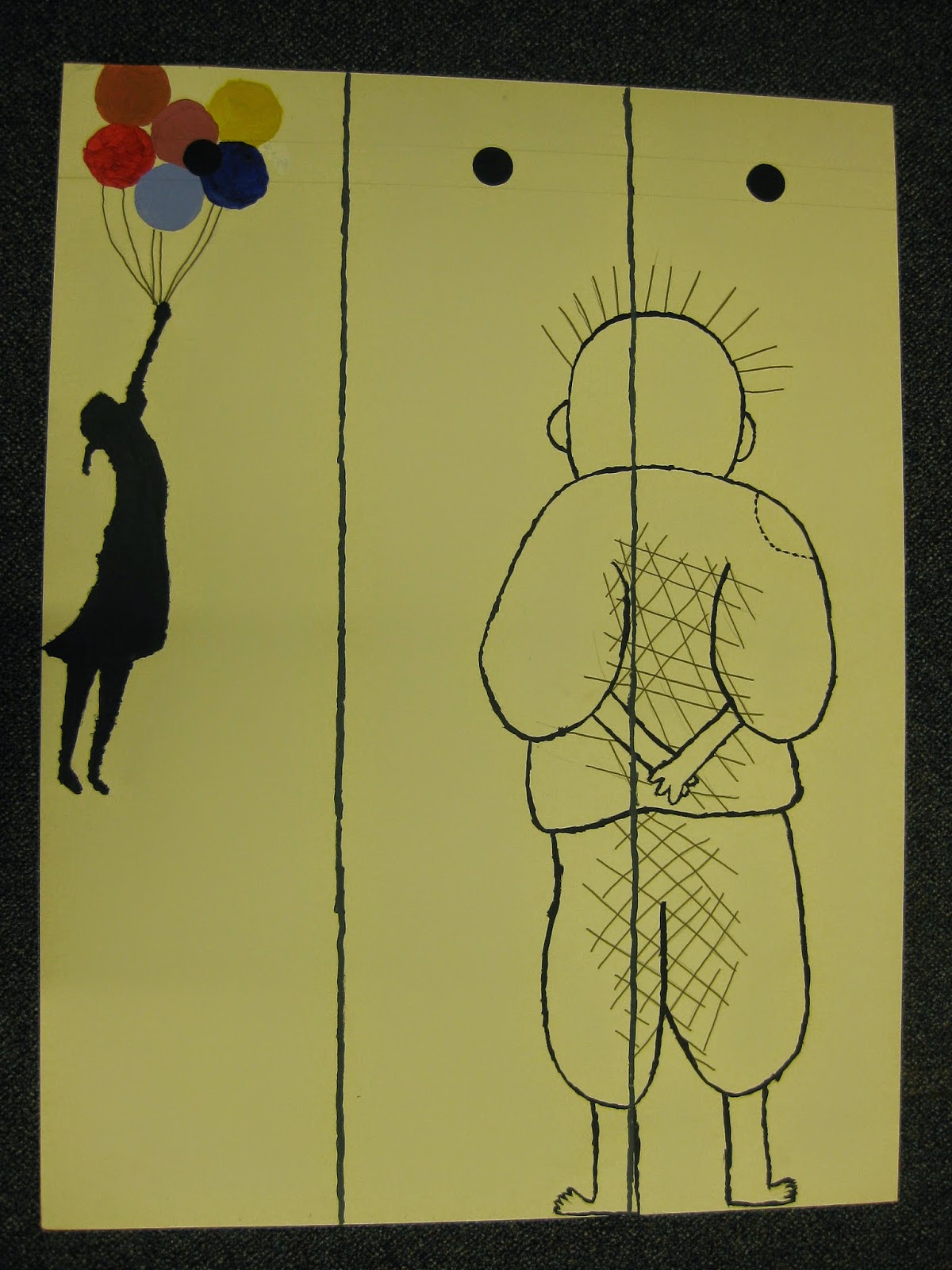
In 2014, the group of Palestine solidarity activists I worked with did a project to help people learn about and imagine the impact of the Wall (also known as the Separation Barrier) in Israel.

Palestinians and visitors from throughout the world have added their own street art, graffiti, and public art to the Wall, as a sign of protest, an invitation to peace, and a critique of the lack of global intervention. Our project consisted of making a series of posters that replicate the art on the Wall. Here's an example:


(I first became sensitized to the importance of wall-art-that-protests-the-wall -- the power of art to demand a new, liberated reality -- in an essay my sister wrote about the Berlin Wall in the late 1980s.)

I have posted photos of the other wall boards we created below.

When placed side-by-side, the boards created a replica (in miniature) of the barrier wall:


"The Women Weep" in the shadow of the containment wall
34th Annual 8th Day Good Friday Justice Walk in Chicago


You can read about the project on the blog of the ELCA Metro Chicago Synod Working Group on the the Middle East.

The project had important "before" and "after" aspects, too.

Making the boards was half the fun. Check out these photos of the "Wall" sign board painting workshops - March and April 2014

. . . and . . . several months after the event, Chicago area readers of the Evangelical Lutheran Church in America (ELCA) publication The Lutheran got to read about the project in that publication (see image at right).

In 2015, I had a chance to see the barrier wall in person. It left me with an ineradicable determination that every Christian needs to become devote to the in-this-world work of liberation.


Resistance art on the wall -- Aida refugee camp, Palestine


Full set of photos
The Wall: posters created by the ELCA Metro Chicago Synod Working Group on the the Middle East for the Good Friday Justice Walk in Chicago in 2014.


"Now that I've seen it I'm responsible for it."


"U.S. aid: injustice anywhere is a threat
to justice everywhere. (MLK Jr.)"


"The wall is lame."


"An eye for an eye leaves the whole world blind."


Hope


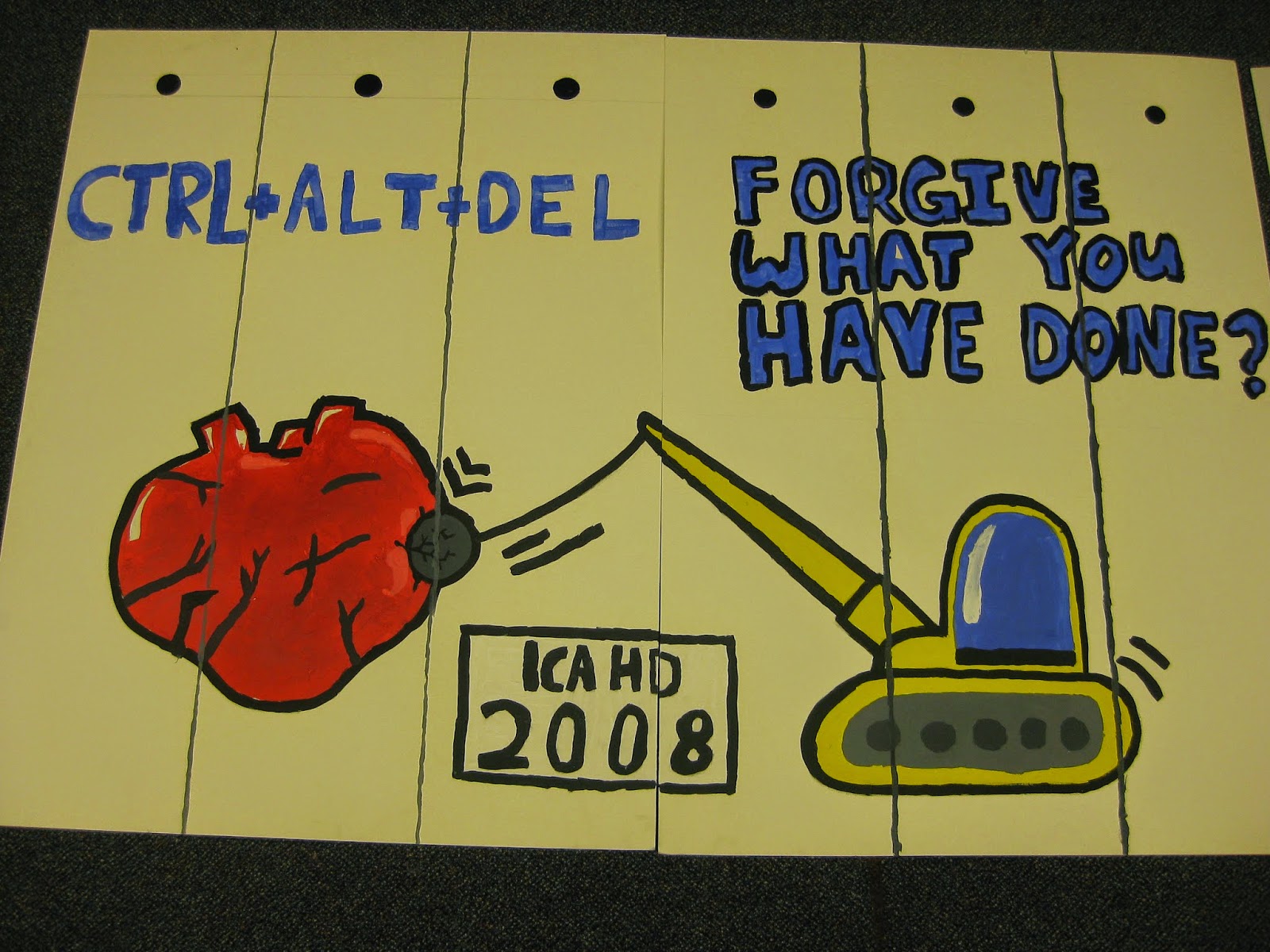
"ctrl + alt + del ... Forgive what you have done? ... ICAHD 2008"


"A country is not only what it does. It is also
what it tolerates. Kurt Tucholsky 1933"


"War is not the answer."


"Your heart is a weapon the size of your fist.
Keep fighting.
Keep loving."


"I am not a terrorist."

Sunday, April 30, 2017

(Most of) The Mideast Wants a Nuclear-Weapons-Free World

MIDEAST:
Which countries are giving the green light to #nuclearban?
(Please share this message on Twitter.)


An important component in the global effort to achieve a total ban on nuclear weapons is the commitment of (most of) the countries in the Middle East.

The map reproduced above is from the ICAN Austria interactive map of countries supporting the nuclear weapons ban negotiations at the UN. The countries marked with a green dot support a nuclear ban.

The situation in the Middle East is suggestive of the larger global effort to ban nuclear weapons. Efforts for a nuclear weapons-free zone in the Mideast have been thwarted for years. Now the supporters have joined together with the global effort to ban nuclear weapons worldwide. See:

Wikipedia: Middle East nuclear weapon free zone

Wikipedia: Haifa International Conference for a WMD-Free Middle East

"Netanyahu thanks US for blocking push for Middle East nuclear arms ban."

You can help get the word out about the efforts of all these nations to bring about a world free of nuclear weapons by sharing messages like the ones below on social media (and by creating your own!).


Thank you #BAHRAIN.
(Please share this message on Twitter.)


Thank you #CYPRUS.
(Please share this message on Twitter.)


Thank you #EGYPT.
(Please share this message on Twitter.)


Thank you #IRAN.
(Please share this message on Twitter.)


Thank you #IRAQ.
(Please share this message on Twitter.)


Thank you #JORDAN.
(Please share this message on Twitter.)


Thank you #KUWAIT.
(Please share this message on Twitter.)


Thank you #LEBANON.
(Please share this message on Twitter.)


Thank you #LIBYA.
(Please share this message on Twitter.)


Thank you #OMAN.
(Please share this message on Twitter.)


Thank you #QATAR.
(Please share this message on Twitter.)


Thank you #TUNISIA.
(Please share this message on Twitter.)


Thank you #UAE.
(Please share this message on Twitter.)


More memes to share: 133 Is a Lot of #Nuclearban-Supporting Countries


Please share this post . . . . 

Sunday, March 5, 2017

In Palestine: What Might a Flower Signify?

On Saturday we fixed up the garden at University Lutheran Chapel here in Berkeley. The topic of "biblical gardens" game up, and we wondered about doing something like that with our garden beds.

Then I remembered: I have first-hand experience of biblical plants -- from the trip I took to Palestine two years. (A trip which, incidentally, was where I met the Berkeley pastor who is the reason I ended up moving to California from Chicago!)

I've re-posted below a blog post about the flowers of Palestine that I wrote during that trip. (Here is a link to the rest of the posts from that trip . . . Faith in the Face of Empire: A journey in search of hope in the land of conflicting narratives.) (And here is a link to one of the many posts on this blog that emerged from that trip: ELCA Resolution on Palestine / Israel: What Does It Mean for Us? )

While I'm at it -- here are a couple of other garden-related posts: A Dream of a "Dream of Red Chambers" Garden for Chicago and One Word: Wildflowers (on the Zero Carbon Chicago blog).


*   *   *


What Might a Blossom Signify?

(originally published March 20, 2015)

Why was this day different from every other day (on our trip)?

Because today was the day that we hiked through the beautiful nature area in Battir.

As we entered the stone steps into the area, we began to get a sense of its grandeur:


The terraced hillside on our right-hand side was filled with olive trees:


Beautiful red poppies dotted the trail from beginning to end:


Wild irises poked up all along the trail as well:


Occasionally, we would pause at remnants left by long-ago inhabitants of the land, such as this vault carved into the rock hillside:


But mainly this walk on the first day of spring 2015 was about renewed life.

Besides the red poppies and the purple irises, it seemed as if there was a flower to claim each of the colors in the rainbow — such as these yellow ones springing up at trailside . . .


and these magenta cyclamen clinging to the rocks at shoulder level . . .


and lone white poppies here and there . . .


As I walked along, in this place so full of meaning, with these distinctive floral sentinels along every inch of the pathway, it suddenly seemed perfectly understandable that people have so often throughout history thought of each type of flower embodying a specific meaning.

What might these blossoms signify?

Every time I lifted my eyes from the trail, I discovered another slice of hillside that was like something crafted by a jeweler:


and the promise of yet more enchanting discoveries just around the corner:


Not all of the plants sported brilliant colors. Yet everything we encountered, whether pine cones . . .


Or thistle stems . . .


. . . was spectacular in its own way.

 Some flowers cried out from the ground for our attention (“Look at us! We’re magenta, too!”) . . .


while others stretched up to confront us eye-to-eye (“Have you ever seen anything as beautiful as me?”) . . .


and a few stubborn fellows seemed to be doing everything they could to ignore us, staking out lonely spots among the rocks and focusing on the sky (“Summer sun? Bring it on!”)  . . .


As we reached the end of the trail, we saw an almond tree whose blossoms framed a structure on crest of the hill in the distance.


It made me think of the Palestinian poet, Mahmoud Darwish, who wrote,

If a writer were to compose a successful piece
describing the almond blossom, the fog would rise
from the hills, and people, all the people, would say:
This is it.
These are the words of our national anthem.
(See “Review: Darwish, between the national and the human” by Raymond Deane on the Electronic Intifada website.)

Could a writer write the story of “faith in the face of empire” in the language of flowers?


Please share this post . . . .