Showing posts with label poetry. Show all posts

Saturday, July 23, 2016

Follow Blogger/Poet Samia J. Hassan in Somaliland

Blogger/poet Samia J. Hassan
Twitter: @SamiaHassan23
samiahassanahmed.wordpress.com
Blogger Samia J. Hassan writes beautiful poetry. You can read it on her blog at samiahassanahmed.wordpress.com.

These words especially resonated with me:

For your country you are merely a number

They want to brag about

(See the full post/poem, "Numbers and Stories")

Samia J. Hassan writes from Somaliland, a self-declared state that is internationally recognized as an autonomous region of Somalia.

"Numbers and Stories" reminded me of two blog posts of my own -- though the poetry of Samia J. Hassan says it all much more succinctly and beautifully:

I look forward to reading everything Samia J. Hassan writes.

Thursday, April 7, 2016

WAR: Will you hear? Will you perceive? Will you think?

Britten's War Requiem - June 3,4,5, 2016 - Berkeley
An amazing thing that will be happening -- in fact, has already begun happening -- here in Berkeley is a performance of Britten's War Requiem. The performance itself will be at the beginning of June, and there have already been lectures at the public library about World War I, the work of Benjamin Britten, and Wilfred Owen and the other WWI-era War Poets. One more lecture will take place next Tuesday with contemporary poets writing about war.

I've written about the War Requiem in the context of other antiwar art. It's a masterpiece.

Some people may question why we need a 50-year-old piece built on the traditional Latin requiem for the dead plus poetry from World War I, created to commemorate a cathedral that was destroyed in World War II, in order to inform our lives today.

I was inspired by commentary on one of Wilfred Owen's poems, provided by Prof. C.D. Blanton at one of the library lectures. Prof. Blanton guided us through "Apologia Pro Poemate Meo" and helped us see the challenge to us in these works of art: when it comes to war, "you shall not hear ... you shall not perceive ... you will not think .... " Most of the time, this is true. (Even if we could, it might make us uncomfortable -- think of Harun Farocki.)

But on the few occasions when we do want to hear, to perceive, to think -- or at least try to begin to do so -- it is through this kind of poetry and music that we can hope to do so.

See you at Hertz Hall . . . .


Related posts

If you want to hear a really angry antiwar ballad, listen to "Wooden Ships" by Crosby, Stills, and Nash:

If you smile at me, I will understand
'Cause that is something everybody everywhere does
in the same language . . . .

(See What Would It Take for Friendship to Trump War? )


Consider the moment in the film All Quiet On the Western Front when the young soldier returns to visit his old high school. The soldier visits the class of the teacher who had goaded him and many of his classmates to enlist in the first place. Encouraged by his teacher to tell about the "glories" of being a soldier, he delivers a damning verdict . . . .

(See Back to School (All Quiet On the Western Front))


"A terrible disease has struck the area . . . people call it the "flu" . . . many in our own community have fallen to it . . . including someone very dear to you, someone in your own family . . . I'm talking about your sister, Margaret." (See November 11, 1918: Another Veteran for Peace )


"Because of the intensified division of labor," the narrator explains, "many technicians and scientists can no longer recognize the contribution the have made to weapons of destruction." "Our department extracts lareic, oleic, and naptha acids . . . . "  "I'm a chemist. What should I do? If I develop a substance, it can be good for humanity . . . ."  "Besides napalm, Dow Chemical produces 800 other products . . . ." Does this familiar to you?

(See American Fire: Still Spreading, Still Inextinguishable)

Monday, November 10, 2014

What Would It Take for Friendship to Trump War?


Friendship
Jim (French) and Jules (Austrian)
carry Catherine in Jules and Jim
I can't stay long - I'm rushing down to the Siskel Film Center to see Jules and Jim - part of their retrospective of WWI films.

I was trying to explain Jules and Jim to my daughter -- trying to lure her away from her college art class to see it with me, if truth be told -- and I wondered: would she be more interested in the situation of the woman character (Catherine, in an unforgettable performance by Jeanne Moreau)? Or would she, like me, be struck by the dilemma of the friends, Jules and Jim, who are called to fight on opposite sides when war breaks out?

Is Jules and Jim about romance? Or triangles? Or is it simply about friendship?

[Watching the film: this is what I was remembering . . . both of them talking about their fear that, in the course of their service, they will kill the other . . . . ]

Why do we let a thing as grotesque as war supersede that most human of impulses - friendship?


Strange meeting

Tomorrow is Veterans Day. Veterans Day falls on November 11, in recognition of the WWI armistice that came on the "11th hour of the 11th day of the 11th month" in 1918.

I'm thinking a lot about -- and listening to -- Benjamin Britten's War Requiem in connection with the day. The work combines the form of a requiem mass with the poetry of Wilfred Owen. The whole work bears close study: the valiant trumpets lead the enthusiastic young fighers into battle in section 3, the true wrathful face of battle in section 9, and much, much more.


Wilfred Owen's regiment
(Source: Voices Compassion Education website)


But I am particularly struck by section 18, which quotes from a poem, "Strange Meeting", describing an encounter between the narrator and a spectre he meets after leaving the battlefield:

“Strange friend,” I said, “here is no cause to mourn.”
“None,” said that other, “save the undone years,
The hopelessness. Whatever hope is yours,
Was my life also . . .

. . . .

“I am the enemy you killed, my friend.
I knew you in this dark: for so you frowned
Yesterday through me as you jabbed and killed.
I parried; but my hands were loath and cold.

Let us sleep now. . . .”

(You can listen to "It seemed that out of battle I escaped" from the War Requiem on Youtube.)

Owen never returned from the war. He was killed November 4, 1918 - 7 days before the armistice.


Say, can I have some of your purple berries?


Purple berries

The War Requiem couldn't be more different than the music of Crosby, Stills, and Nash, and yet I find nearly the same sentiment in the song "Wooden Ships":


I can see by your coat, my friend,
you're from the other side,
There's just one thing I got to know,
Can you tell me please, who won?

Friends pick mulberries together
" . . . we stopped and had a few berries . . . . "
(Source: Pass the butter please blog)
Like Wilfred Owen talking about two former "enemies," CSN see a simple desire to live and share:

Say, can I have some of your purple berries?
Yes, I've been eating them for six or seven weeks now,
haven't got sick once.

Probably keep us both alive.

If you want to hear a really angry antiwar ballad, listen to this live performance of "Wooden Ships."

If you smile at me, I will understand
'Cause that is something everybody everywhere does
in the same language . . . .


In Chicago, there are mulberry trees that, in the summer, are filled with purple berries you can eat. I don't know how many times I've paused on a summer morning to pluck a berry, and have thought, "If you smile at me, I will understand . . . ."


TAKE ACTION


Related posts

It's time for us to get honest about the true costs of war, including the long term health consequences for people who serve in the military, and the corresponding long-term costs that our society must commit to bear.

(See How to REALLY Honor Veterans)


Have you ever wondered . . . instead of just tsk-tsking about "The Great War," why doesn't anyone actually seize the occasion to try to put a stop to future wars?

(See Everyone Talks About World War I, But No One Does Anything About It )


Today, it may seem quaint to think about the role that trains played in the cataclysms of the 20th century. Could something as simple as a bunch of trains, once set in motion, possibly put people on a course they couldn't reverse? And yet . . . what if I told you that the hyper-organized planners of the U.S. government have a timetable to make 100 drone bases operational in our country in the near future?

(See War By (Drone Base) Timetable? )
 

Thursday, January 9, 2014

Creative Resistance 101: Uncle Tom's Cabin

Lake Michigan: imitating the Ohio River crossed by the
escaping Eliza? (AP Photo/Nam Y. Huh)
I've been locked in Chicago's polar freeze for several days now.  But that's fine with me.  I've got Uncle Tom's Cabin.

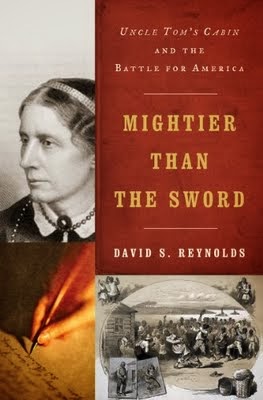
Or, to be more precise, I've got a book about Uncle Tom's Cabin that is un-put-downable I think is a must-read for anyone involved in the peace and justice movement.

Mightier than the Sword: Uncle Tom's Cabin and the Battle for America, by David S. Reynolds, details what may be the greatest example of creative resistance in history.  And it's so relevant today: hey, we all know that stuff's messed up . . . the eternal problem is now to get the general public motivated to act!

Imagine the moment when Harriet Beecher Stowe's sister-in-law said, ""...if I could use a pen as you can, Hatty, I would write something that would make this whole nation feel what an accursed thing slavery is."  (Have you encouraged an artist or writer today? :-)

Eliza Crossing the River
Image taken from the title page of  
Pictures and Stories from Uncle Tom's Cabin
(Boston: John P. Jewett and Co., 1853).
Courtesy of the American Antiquarian Society.
(More at Curious and Curiouser: Uncle Tom’s Cabin,
Anna Leonowens, and The King and I by Marcus Wood)
Eventually, in large part due to Stowe's novel, Uncle Tom's Cabin, the United States was converted from a country in which a small number of people thought slavery needed to be ended into a country determined to act to end slavery. This literary work took the movement wide, and it took it deep.

Why is a novel an important tool for creative resistance?

Well, for one thing, the novel is inherently inclusive. All movements thrive on the involvement of large numbers of people who are all encouraged to bring their special insights and contributions to the overall effort. As Reynolds explains, Harriet Beecher Stowe gathered an immense volume of material into a whole which then could be disseminated to achieve "distributive power," i.e. the "capacity for generating varied responses in different contexts." (p. 88)

The grudging compliment from a Southern paper summed up why this approach had power: "Thousands will peruse an interesting story, and thus gradually imbibe the author's views, that would not read ten lines of a mere argumentative volume on the same theme." (p. 152) (How many times have we complained that we make flyers, but not one reads them?)

In addition, Reynolds describes how the format of the novel -- the weaving of detail after detail into a whole -- supported a systematic critique of slavery, rather than just being an attack on certain "bad people."

Of course, Uncle Tom's Cabin wasn't just a novel.  In fact, before it was anything else, it was a magazine series, written in installments. As such, it was part of a social phenomenon: "reading the weekly installments aloud became a family affair." (p. 126) And reading aloud, in general, was such an important habit in families and groups that it is estimated that actual "readership" was 10 times the number of books actually sold. (Approximate first year sales: US, 300,000 copies; UK, 1 million; rest of world, 1 million.)  (Hmmm . . . what family entertainment rituals are we taking advantage of?)

A film version of a theatrical adaptation of a derivative work
containing a localization: Performance of Uncle Tom's Cabin
in the 1956 film version of Rodgers and Hammerstein's
The King and I [based on Margaret Landon's 1944 novel,
Anna and the King of Siam]. (From Wood: "Click on the
image to view an excerpt from the film on the Uncle Tom's
Cabin and American Culture Web site
. Scroll down to the
bottom of the linked page to see the film.")
But the special genius of Mightier than the Sword, in my opinion, is making it clear that it was other derivative works -- especially plays -- that made the messages of Uncle Tom's Cabin really pervasive.  That's right -- in the 1850s they were all about merchandise tie-ins, adaptations, and sequels! (Think what it would mean if we really took to heart what this might mean for our peace and justice movements today . . . . )

The theater was key. According to Reynolds, "many more people saw plays based on Uncle Tom's Cabin than read the novel." (p. 136)  It's not insignificant that the producers of the Uncle Tom's Cabin adaptations revolutionized theater in America: "introduced single-feature entertainment" (p. 137) . . . "longest-running play in American history" (p. 137) . . . "made theater, once reviled, a holier place than the church in America" (p.145) . . . "By 1853, six versions were appearing on the London boards and four in Paris" (p. 145).

Well, I could go on and on -- just the treatment of religion and the role of "people of faith" in the movement to end slavery would require a blog post all its own -- but I should probably leave some of the book for you to discover for yourself.  So I'll just offer one last quote.  Reynolds points out that an important part of the power of Uncle Tom's Cabin was that the depth of the novel form enabled Stowe to tackle multiple arguments -- before her ideological opponents had a chance to weigh in. In fact, he says,

"she preempted them on virtually every point" (p. 156)   

I think this is especially important for those of us who want a forum in which to present ideas in a way that goes beyond the sound bite.


(All page references are to the 2012 Norton paperback edition of Mightier than the Sword: Uncle Tom's Cabin and the Battle for America, by David S. Reynolds)


Want to learn about creative resistance in the movement against drones? See the Creative Resistance section in the Organizer Manual on the NSDSW wiki!


Related posts

I often refer to how important the films of Iran have been in helping me open my mind to the possibilities of a peaceful relationship with that country.  I have been fortunate to be able to go see some of the best films from Iran every year at the wonderful Siskel Film Center in downtown Chicago. The will be another Festival of Films From Iran showing there in February, 2014.

(See A Force for Peace: Getting to Know Iran Through Film)


For the next three months, people will be talking about the film 12 Years a Slave and its Oscar prospects. And well they should. The film is about the experiences of the free man, Solomon Northrup, who was seized and enslaved for twelve years, and it may be the best thing ever to come along for enabling us to confront the true meaning of our history of oppression and racism in America. But it's not just about history. 

(See 12 Years a Detainee)


My most prominent memory of my first viewing of the Guantanamo film, The Response, is of one of the stars of the film -- Kate Mulgrew of Star Trek fame -- participating in a panel after the screening. I was blown away when she said, "I did this because our civil liberties in our country have been gravely damaged and we all need to contribute to repairing them."

(See Understanding What Guantanamo Means)


 Diverse artists and media kept the question of Guantanamo alive during 2010. Here's my list of "Arts and Media 2010 Responses to #Guantanamo" favorites -- tweeted during December, 2010.

(See Arts and Media 2010 Responses to #Guantanamo )


We need film and music and the other arts to keep turning our attention back to the truth.  Despite the fact that creative expression can sometimes be confusing, distracting, or even misleading, it does tend to keep bringing us back to the deep questions, and to open our eyes to what we were unable to see just yesterday.

(See Air Power Infatuation (1967 All Over Again)


Five big realizations I'm taking away from the 2013 CODEPINK Drone Summit "Drones Around the Globe: Proliferation and Resistance" in Washington, DC.

(See The 2013 DC Drones Conference: 5 Big Takeaways )


@DroneHaiku reminded me of all the creative ways that we have used social media like Twitter in the past year to built widespread, robust, multi-dimensional protest. Efforts like #AfghanistanTuesday. And #Natoin5. And #NoIranWar.

(See #Art #Poetry and More During #AprilDays #Protest - #aprildayseverywhere )


Wednesday, September 25, 2013

Read a Poem - or Eat a Peach - for Peace

I have heard the mermaids singing, each to each.

I do not think that they will sing to me.
(from "The Love Song of J. Alfred Prufrock" by T.S. Eliot)
We are in a phenomenal moment right now. There are numerous opportunities for all of us to think differently -- and to change the world by doing so.

In particular, I keep asking myself, "What would happen if people opened their minds about Iran?" The presence of the new president of Iran, and his peace overtures at the UN, are creating the perfect moment for all of us to step outside our comfort zones.

It's made me stop and think: maybe we can encourage many more people to see things in a new light. Maybe this is the meaning of a "mass movement" -- a large number of people moving a little, rather than just a few people moving a lot.

I'm reminded of T.S. Eliot's poem, "The Love Song of J. Alfred Prufrock." I identify strongly with the timid Prufrock, for whom little steps are momentous ("Shall I part my hair behind? Do I dare to eat a peach?"). Doing new things -- and thinking in new ways -- is difficult.

I wish I were more of a revolutionary. But it helps to know that one of my heroes - Duane Allman - had similar thoughts. "There ain't no revolution, it's evolution, but every time I'm in Georgia I eat a peach for peace." (See the article about the Allman Brothers album Eat a Peach" on Wikipedia.)

I guess this is what Robert Greenwald had in mind with his Rethink Afghanistan project. His invitation was simple: Maybe there's a different way to think about this. (That was one of the first things that got me really active in the antiwar movement.)

Let's face it: what we all really want is for our lives to have meaning -- ideally BIG meaning, meaning in really cosmic ways! Or, as Eliot said,
To have squeezed the universe into a ball
To roll it toward some overwhelming question
That is, to bring on some high, life-and-death drama!
To say: “I am Lazarus, come from the dead,
Come back to tell you all, I shall tell you all”—
But doesn't it all start with a little, nearly insignificant, opening of the mind?

Go ahead . . . that mermaid is singing to you!


RELATED POSTS

Should we think differently about Hollywood entertainment and the stories it tells our young people?

See  "Ender's Game" and the Militarization of Youth: Can We Talk About This?


Have you started to take it for granted that your life is an open book?

See Fed Up With Being Spied On


We can now entrust all the dirty work -- including war -- to robots. (Or can we?)

See A Modest Proposal: Debate the Drones 

Friday, July 5, 2013

"Antique," "Literary," and "Natural" Will Soon Be Subversive Terms in America

[Part of the series: 2013 = 1984?]


"It was a queer thing, even a compromising thing, for a Party member to have in his possession. Anything old, and for that matter anything beautiful, was always vaguely suspect." (George Orwell, 1984 - p. 85)

Winston Smith writes on actual paper with -- gasp! -- an actual fountain pen.
"The pen was an archaic instrument, seldom used even for signatures, and he had procured one, furtively and with some difficulty, simply because of a feeling that the beautiful creamy paper deserved to be written on with a real nib instead of being scratched with an ink pencil. Actually he was not used to writing by hand. Apart from very short notes, it was usual to dictate everything into the speakwrite, which was of course impossible for his present purpose." (p. 6)

Illumination: Medieval Scribe


Winston's pen "slid voluptuously over the smooth paper." (p. 16) Anyone who has read the book knows where that led.


Beauty You Can Sink Your Teeth Into

For me, the quintessence of the beautiful and the old and the memorious has been books made by traditional techniques, and the care that practitioners of the book arts lavish on them.

I once saw August Hechsher give a talk at the South Street Seaport Museum in New York City, and he talked about the words in books made by the letterpress technique as having a quality you could almost sink your teeth into.


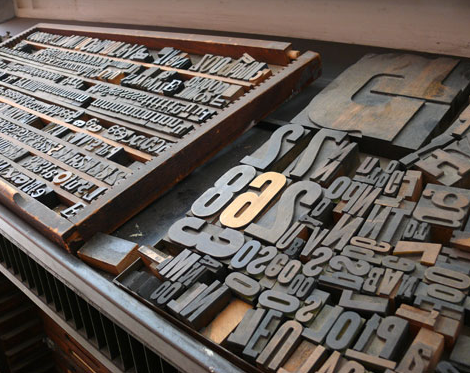
Typecase with wooden display fonts


From the paper, and the typefaces, and the inks, the love of the beauty and antique quality extends inward to the subject matter -- not surprisingly, hand-printing is often used for special editions of poetry. -- and outward to the covers and bindings made of marbled paper and leather and other materials.


Precious: Marbled Paper and Leather Binding


It's not conventional. It's not practical. It's certainly not economical. But it's satisfying and liberating.


When did "beautiful" and "old" become dangerous qualities?

Scribes -- laboring in secret to preserve and propagate truth -- have long been cultural heroes. (See Thomas Cahill, "How the Irish Saved Civilization: The Untold Story of Ireland's Heroic Role From the Fall of Rome to the Rise of Medieval Europe".)

Winston, daring to jog his memory and his senses and get truth down on paper, certainly stands in this tradition. But Orwell makes a point that Winston's actions have layers of subversion. There are the actual words he writes (DOWN WITH BIG BROTHER DOWN WITH BIG BROTHER DOWN WITH BIG BROTHER . . .), the act of having a diary itself, and, finally, the very fact of possessing these beautiful, old objects.

Memories of Childhood: Home for a Bunny

Just as a few old words bring to mind a nursery rhyme, which in turn brings to mind the sound of bells, and that in turn stirs up memories of a long-forgotten London, almost any object -- through its oldness or its beauty or both -- can stir the conscience and take it in directions that no one can control.


Sensual, Liberating, Subversive

Once you begin to understand the liberating -- and thus subversive -- power of the beautiful and the old, you start to see implications in area after area of our lives.

Paper or plastic?

Ambient sound or piped-in music?

Grass or concrete?

Fresh air or chemicals?

Wild Flowers Every Child Should Know 
by Frederic William Stack
(1914)


What We've Cut Ourselves Off From

It's important that we start to think about the way in which the daily details of contemporary life separate us from the beautiful and the old.

Obviously, there is our obsession with mass-produced stuff. And, of course, there is the way in which we limit what we see and touch to objects that are sold by mass merchandisers.

There is the tendency to sheath or envelope every product in a smooth, sleek exterior, so that we are protected from any sense of what is really going on inside.


Smooth: Infiniti

And, of course, there is the way in which all of these trends are combined in objects of mass worship that envelope all communication in a smooth sheath and invite us to seal ourselves off from the world around us.

Okay, okay -- so perhaps we're not completely sealed off yet. But consider these words from 1984: "It was as though some huge force were pressing down upon you -- something that penetrated inside your skull, battering against your brain, frightening you out of your beliefs, persuading you, almost to deny the evidence of your senses. . . . Not merely the validity of experience, but the very existence of external reality was tacitly denied by their philosophy."


"Wha? Did you say something?"


"Siri? What is a 'speakwrite'?"

Of course, all of the subtlety and variety of the beautiful and the old is brought to a fine point by language -- especially beautiful and old language.

In 1984, Orwell describes at length the effort to cleanse language of all complexity and nuance. Winston's co-worker, Syme, describes the work he is doing on the Eleventh Edition of the Newspeak dictionary. "You think, I dare say, that our chief job is inventing new words. But not a bit of it! We're destroying words -- scores of them, hundreds of them, every day." (p. 45) Syme explains:

"It's a beautiful thing, the destruction of words. Of course the great wastage is in the verbs and adjectives, but there are hundreds of nouns that can be got rid of as well. It isn't only the synonyms; there are also the antonyms. After all, what justification is there for a word which is simply the opposite of some other words? A word contains its opposite in itself. Take 'good,' for instance. If you have a word like 'good,' what need is there for a word like 'bad'? 'Ungood' will do just as well -- better, because it's an exact opposite, which the other is not. Or again, if you want a stronger version of 'good,' what sense is there in having a whole string of vague useless words like 'excellent' and 'splendid' and all the rest of them? 'Plusgood' covers the meaning, or 'doubleplusgood' if you want something stronger still. Of course we use those forms already, but in the final version of Newspeak there'll be nothing else. In the end the whole notion of goodness and badness will be covered by only six words -- in reality, only one word. Don't you see the beauty of that, Winston? It was B.B.'s idea originally, of course . . . ." (p. 45)
I have to catch myself as I think, "Yes, quite precise, like good computer programming language!"

In fact, how much have we begun already to self-adjust our language as more and more of our daily activity is mediated by search algorithms? How much have we become speakers of "Google"?


Who's talking to whom?


And to what degree do we limit our expression so that Siri or some other speech recognition app can understand us?

Perhaps our beautiful, old objects are protecting us. Helping us maintain a bridge to our external reality, and to the past. (A bridge that is essential to experiencing any kind of liberty.)

Look around you today.  What beautiful, old objects guard your independence? Perhaps . . . a book?


Nineteen Eighty-Four
by George Orwell


(1984 page references are to the 2009 Plume paperback edition.)


Related posts

If we are willing to see the beauty will it help us to overcome our fear?

(See Syria - Strange and Dangerous? or Familiar and Beautiful?)


 One minute people are stopping to notice the beautiful things . . . and the next they are thinking dangerous thoughts.

(See Read a Poem - or Eat a Peach - for Peace)


Sometimes a pack of cigarettes can be a thing of beauty.

(See Long Life, Connected Lives)


I'm marveling at the adjacency of a piece of public art -- one with a very clear message about the risk of human ambition and self-absorption and heedlessness -- to the center of political power in the city of Chicago.

(See NUCLEAR WEAPONS: Who will bring us down to earth? )

Wednesday, April 3, 2013

#Art #Poetry and More During #AprilDays #Protest - #aprildayseverywhere

It took a haiku to make me believe in the power of Twitter again.

We're at the beginning of an important antiwar campaign - the April Days of Action Against Drones. Part of that campaign is getting the word out on Twitter, using the #AprilDays and #nodrones hashtags.

I've been very focused on the dozens of protests that have been scheduled at the facilities of drone manufacturers, research facilities, and bases. We've been using Twitter to encourage turnout.

In the last week, three things have encouraged me to remember that protest can include a lot more.


Creative Resistance: A Chicago production of The Predator by Jack Gilroy


The first was a production of the play (reader's theater) called The Predator. This is important because people everywhere can download the script and share it with their communities -- whether or not they are able to join a street protest. The Predator is a great way to educate people about the issues surrounding drones.

#aprildayseverywhere

The second was the Drones Quilt project. Each square of the quilt is made by an ordinary member of the public, who writes their name and then the name of a victim on a square of fabric. The quilt will be finished by the 1st May and, on the 6th, will be taken on a pilgrimage for peace, calling for an end to the use of armed drones.


Creative Resistance: The Drones Quilt Project


People everywhere -- no matter where they are -- can take the time to make a square and add it to the quilt.

#aprildayseverywhere

The third -- and this was the big Aha! moment -- was @DroneHaiku.


Creative Resistance: @DroneHaiku on Twitter


@DroneHaiku reminded me of all the creative ways that we have used social media like Twitter in the past year to built widespread, robust, multi-dimensional protest. Efforts like #AfghanistanTuesday. And #Natoin5. And #NoIranWar.

With @DroneHaiku, all you need is 17 syllables and a Twitter account.

#aprildayseverywhere

No matter where people are, no matter what their gifts are, they can be part of the April Days of Action Against Drones.

What are YOU prepared to do?


Related posts


Eventually, in large part due to Harriet Beecher Stowe's novel, Uncle Tom's Cabin, the United States was converted from a country in which a small number of people thought slavery needed to be ended into a country determined to act to end slavery. This literary work took the movement wide, and it took it deep.

Why is a novel an important tool for creative resistance?


(See Creative Resistance 101: Uncle Tom's Cabin )


Grounded raises tough questions. I was hoping that the play would challenge the idea that killing people with drones is good. It's a reflection of the seriousness of this work that that is just one of the issues it raises; others include our society's willingness to destroy the people who we employ to "serve" ("serve our country," serve us in general), our culture's worship of violence / use of force, and the consequences of pervasive surveillance.

(See "Everything Is Witnessed": Searching for "the Guilty" in GROUNDED )


I'm marveling at the adjacency of a piece of public art -- one with a very clear message about the risk of human ambition and self-absorption and heedlessness -- to the center of political power in the city of Chicago.

(See NUCLEAR WEAPONS: Who will bring us down to earth? )