Showing posts with label military spending. Show all posts

Monday, January 23, 2017

Can Trump Drink the Pentagon's Milkshake?

Base data at Global Research
People who oppose war tend to notice two things.

First: the US has by far the biggest military in the world, spends the most money, has its forces and bases and weapons and technology spread out to every corner in the world, and is engaged in conflicts -- small and large, high-profile and clandestine -- everywhere.

Second: it's very difficult to arouse the general public in the US to want to change that.

We try moral arguments. We try economic arguments. People are really not interested.

*   *   *

So: it is intriguing to see the statement in Donald Trump's inaugural address, consistent with what he said in his campaign, about pulling back militarily:

We've defended other nations' borders while refusing to defend our own and spent trillions and trillions of dollars overseas while America's infrastructure has fallen into disrepair and decay. We've made other countries rich while the wealth, strength and confidence of our country has dissipated over the horizon.

I wonder what people think when they hear that "trillions and trillions of dollars." Does that make them want to see what would happen if money was taken away from the Pentagon and used in a way that they could actually see the benefit?

Let's not quibble for a moment with whether all that US military spending has really been directed at "defending other nations' borders." The immediate question for me is whether anyone -- Donald Trump or anyone else -- has the power to make any significant changes to the defense spending or any other aspect of the defense establishment in this country.

I'll be blunt: for the past eight years, we've seen what happens under the command of a nice, respectful person. Maybe we need to what a mean, disrespectful person can do.

I fully expect the defense establishment to seek to crush Trump if/when he attempts to make any changes. I frankly don't know how someone in his position manages to survive. And yet . . . .

Trump sent a signal with the bit about the F-35 spending. Of course, that was all theater. But I think the point we should not miss is that he does have a lot of support from people "out there" -- and the F-35 gambit was part of shoring up support as the buildup to something bigger.

A lot of us cringe at the "us vs. them" narrative, and the "disrepair and decay" narrative, and the "wealth = strength and confidence" narrative.  Although, to be honest, many of us have tried variations on these narratives -- we just found that they didn't work. So maybe what we find so cringe-worthy is that someone else has actually tweaked them into utility.


The Art of the Deal?

Make no mistake, Donald Trump isn't going to embark on a negative -- taking money away from the military -- without leveraging it into a much bigger positive:

We will build new roads and highways and bridges and airports and tunnels and railways all across our wonderful nation. We will get our people off of welfare and back to work rebuilding our country with American hands and American labor.

Can you spend "trillions and trillions of dollars" on that? You bet you can.

If Donald Trump knows one thing, it is that when you embark on building stuff, it creates a lot of jobs for ordinary people, and that money enters the local economy in a way that has a big multiplier effect.

I keep remembering John Maynard Keynes saying something to the effect that, if you can't think of anything better to do, just have people dig a hole and then fill it up again. And we've got a lot better things to do than dig holes.

Vision for a nationwide rail system
(See An Infrastructural Alternative to Military Spending)
Just a few weeks ago, I wrote a piece about how, if we hope to move towards a world beyond war, we need to shift our infrastructure spending -- to something like a national high-speed rail network. I didn't take quite the same tack as Donald Trump. But what if his approach gets us to the same place?

Sure, the Republican establishment won't be thrilled with this kind of Rooseveltesque program. (Oh wait -- that's right -- the Republican establishment didn't elect Donald Trump.)

It becomes a lot harder for the military establishment to crush you when people are feeling really, really hopeful about what your infrastructure development plan is going to mean for them and their communities.

A clue to how important this is to Donald Trump, and what his strategy is, may lie in his appointment of Elaine Chao as Transportation Secretary. (How is this picture not like the others . . . ?)


Last week I wrote about what might possibly be motivating Donald Trump to cut nuclear weapons. (Hint: think about where hotels go.) When it comes to trading military bases abroad for urban transit hubs in the US, maybe we should ask the same question. Need a hotel with that, fella?


Please share this post . . . .

Monday, December 12, 2016

An Infrastructural Alternative to Military Spending

The Trump victory has drawn attention to large parts of the US that feel left behind. Maybe the military-industrial complex was never really designed with their interests in mind . . .

As we consider how we can move towards a world beyond war, it is obvious that one key is to change the way we are investing our money:

In a world beyond war, it will no longer make sense to be in possession of massive amounts of infrastructure for carrying out war.

Although this axiom seems obvious, several factors make its application challenging. Some of those factors are general, and some are particular to the US, so important because of the degree to which it leads the world in military spending.


The circularity of military infrastructure spending

I think everyone can agree on the fact that, to some extent, military spending is not just a consequence of war, but also an instigator of it. Conversely, to the degree that war is going to go away, that going away can be hastened by an early decrease in military spending.

Prepare . . .
Yes, George Washington saddled the US (and the world) with one of history's most unfortunate bon mots: "If you want peace, prepare for war." It's a statement that is tedious to try to refute, but only because of its delightful symmetry (and its source). It just doesn't happen to be true.

Or at least: even if it was true once, that doesn't make it true for all time . . . .

For it is self-evident that there will be a moment when the market realizes that arms are out and something else is in -- much as the market is currently figuring out that fossil fuels are out and alternative energy sources are in. When that moment comes, profit trumps bon mots, and the paradigm change goes from being hesitant to being an avalanche.

This is especially true if the "something else" has a strong international/commercial emphasis. (Think tourists, not troop ships.)

"If you want prosperity, you need to be open for business."


The electoral stranglehold

The peculiar nature of US public spending is that it must be authorized by a Congress that takes its shape from our peculiar electoral system.

Without working out here the logical steps -- you can do this for yourself, at your leisure -- the fact is that electability at the congressional level is a function of the ability to bring dollars to the district from the federal budget, and the one sure instrument of nationwide distribution is military spending. No one gets to stay in Congress if they don't bring home the bacon. (See, for instance, "Congress’s Deep Hypocrisy on Defense Spending," Bonnie Kristian in TIME, March 17, 2016.)


Military bases in the continental US. (Militarybases.com)

Bases, defense labs, military contracting, military academies and colleges, and recruitment - they all add to the tab. The money is spread across the country according to a very logical calculus.

I don't think we're going to change the congressional system any time soon. But can we give members of Congress some different bacon to bring home?


A grand bargain

Everyone knows that domestic infrastructure in the US is in a woeful state. It should be possible to make a trade-off: cut spending on military, increase spending on infrastructure.

In my view, the problem with that proposition is that it is not enough of a sure thing. In other words, it's not enough to say, "We'll put together a list of bridges to fix and be assured that sooner or later we'll get around to your district." No, there needs to be a comprehensive project, such that at the very moment a given politician signs away the benefits of military spending in his/her district, the alternative spending gets delivered.


Vision for a nationwide rail system (US High Speed Rail Association)


An example of such a comprehensive system is a national rail system. Pictured above is a vision supplied by the US High Speed Rail Association. To become interested in the possibilities of such a system, it is necessary only to look into the rail maps of Europe or China.

The jobs and other opportunities created in districts throughout the US by all the primary, secondary, and tertiary lines in such a rail system would provide enormous incentive to move spending from military uses to civilian uses. And perhaps as people got a taste of the benefits that spending could provide nearby they would see the desirability of moving the money from far-flung foreign bases, as well.


What I have sketched out here is not intended to specify "the" answer; I put forward rail development by way of example. What I do hope is that this helps frame the problem for successful solving: a very different way of investing for national prosperity will become obvious the nearer we get to a war-abolition environment, and our task is to make it obvious sooner.

See also ...

IT'S A LOCK: Why the US Can't Break Its Addiction to War
What Will "Strategic" Mean in Our Children's Lifetime?
Cutting Defense: Are We STUCK?


Related posts

There is a growing movement of people focused on the "world beyond war." To many of these people, the question is not "if" but "when?" They share a conviction that the world will get there, and they see that it makes a difference how quickly (and in what manner) the world gets there.

(See WAR: Headed for the junkheap, yes . . . but how quickly?)


Adopting a "world beyond war" frame -- saying "war is going away; the question for me is how fast" -- implies optimism-realism, outcome orientation, and humility.

(See The Mind of the "World Beyond War" Activist)


It seems very hard to imagine having arrived at the world beyond war without the hand-in-hand changes in education, infrastructure investment, and the way society decides on communal action in the face of conflict.

(See Where to Put Effort for a World Beyond War)

Tuesday, July 26, 2016

The Election 2016 Diet: Invest 100 Hours for Peace

GOP in Cleveland . . . Dems in Philadelphia . . . Donald Trump . . . Hillary Clinton . . . Bernie Sanders . . . DNC . . . emails . . . Russians . . . NATO . . . FOX . . . CNN . . .  aaaaaaaaaaaaa!!!!!!!

2016
I support ANTI-WAR candidates!
(Know Any?)
The 2016 US presidential election is one of the most perplexing ever for people who oppose war and militarism.

The Democratic candidate is running on her credentials as a tough hawk; the Republican candidate makes random remarks that oddly align with some antiwar positions. The circus atmosphere is bigger than ever and the third-party antiwar candidates that we might usually place some hope in are lost in the swirl of events.

This year seems to underline a difficult truth: in the run-up to the US presidential election, it always seems axiomatic that this will be the opportune time to make headway on the antiwar agenda; but in the craziness of election season itself it becomes obvious just how far out of the action we antiwar people are.

As I reeled from last week's GOP convention shenanigans and find myself drenched in another week of party-business-as-usual during the Democratic convention, I'm having a moment of clarity: these people are stealing my time.

There are, what, 100 days remaining until the election in November? Am I really going to let the next 100 days be commandeered by the minutiae and couch-quarterbacking of this election?


Consider: what if each of us claimed back the time that election 2016 is trying to demand of us? What if we said, "I am not giving you my attention?" What if, instead, we acknowledged that we know right now what we're going to do on election day, and we don't need any more TV coverage or newspaper stories or Facebook posts or tweets, and that instead we were going to use that time in a way of our own choosing?

What would you do with that extra 30 minutes or hour or . . . ?

Here's a radical proposal: what if each of us spent that extra hour a day over the next 100 days to simply think? Imagine saying, "I am investing these 100 hours in thinking deeply about what it will take to change the war-like ways of this country I live in. I am going to ask hard questions, confront what's really standing in the way, think creatively, and come up with new ways to be an effective peace worker. This is my time and I am going to make the best use of it."

Taking a break to think.  The results could be . . . revolutionary . . . !


Think about . . . how to get to a world beyond war FASTER . . .

Think about . . . getting networked with others in the peace movement . . .

Think about . . . how to use social media more effectively . . .

Think about . . . roles women play in the peace process . . . 

Think about . . . having difficult conversations . . .

Think about . . . the structural problem of "thermonuclear monarchy" . . .

Think about . . . US Constitution and what we might do differently . . .

Think about . . . all the people doing peace work, and what part YOU want to play . . .

Think about . . . creative resistance to war and militarism . . .

Think about . . . how people encourage more people to be their best and make a difference . . .

Think about . . . ? . . .


Related posts

In four hundred and thirty-five Congressional districts, there is an inseparable relationship between campaign funding for Congressional races and the military contractors. How do we push back?


(See IT'S A LOCK: Why the US Can't Break Its Addiction to War)


It will benefit us antiwar activists in the US to attend to and reflect upon the importance of these Sustainable Development Goals to achieving the goal of ending war.

(See PEACE DAY 2016: What comes first? Demilitarization? or Development?)


Election 2016 will come down to how the candidates propose to deal with ISIS, and whether they respond to the urgency of the Black Lives Matter movement.

(See To Grab the Win, Might Trump or Hillary Surprise Us?)


Thursday, April 28, 2016

IT'S A LOCK: Why the US Can't Break Its Addiction to War


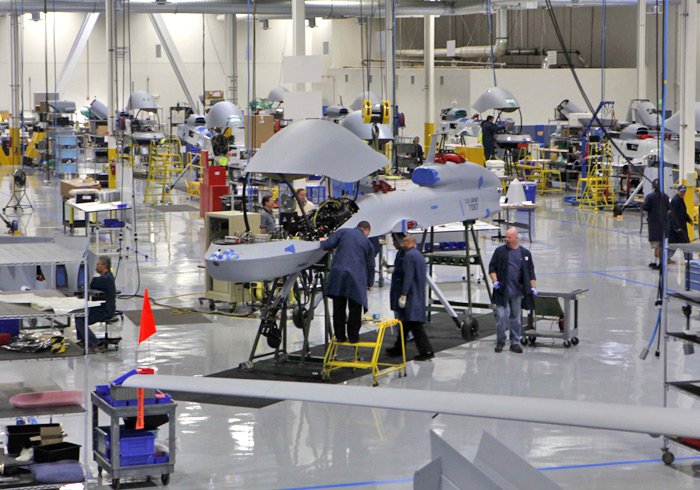
"Technicians at Poway [CA]-based General Atomics Aeronautical Systems
worked on the fuselage of a Sky Warrior drone . . . . The company’s unmanned-
aerial-vehicle program includes the Sky Warrior, the Predator and the Predator B."
(2009 photo - John Gibbins / Union-Tribune)


The new film about the arms trade, Shadow World, screened last night in Berkeley.

There is much that is provocative in the film, and everybody who cares about ending war should see it and share it with others in their community.

In particular, the segment about the Pentagon whistleblower Franklin Spinney caught my attention. Spinney talked about the systemic nature of the problem -- military spending that penetrates every single Congressional district. In effect, we're stuck. To break the hold of war on the US, we need to break the hold of military spending on every Congressional district.

Let's admit it: we've got a problem.
This was reinforced in the discussion following the screening, when Andrew Feinstein -- author of the book on which the film is based -- pointed to the inseparable relationship between campaign funding for Congressional races and the military contractors.

This idea is not new to me. I moved to California last year, fully aware that much of the beautiful California lifestyle is built on weapons manufacturing. The Concise Untold History of the United States by Oliver Stone and Peter Kuznick tells us that, between 1951 and 1963, California benefited from $67 billion in defense contracts (p. 218-9). In my own work on the problem of drones, I've come to learn that a relatively new player in defense, General Atomics, has become a star in the San Diego area economy by building Predator and Reaper drones.

Can drone jobs be "good jobs"?
But the question of how to push back against the problem has seemed gargantuan. Four hundred and thirty-five Congressional districts: how to begin?

It occurred to me that I could start by looking into California's 53 Congressional districts. But that alone is a huge job . . . and it's still just one state.

By coincidence, yesterday I was also thinking about another question: the readership of my blog is growing very fast . . . but where is it all headed? What do I hope the outcome is?

And then I realized that what I hope for is actually quite simple: I hope to suggest to people that they can use simple tools like blogs to get important information out to a wider audience.  In effect, these blogs and other social media are our answer to the complaint that the mainstream media doesn't report the important stories, and distorts the stories they do report. We need to be our own media.

Chicago activists are taking on Boeing
None of us has to do the whole job his/her self. We're a swarm.

So here's my promise: I will knuckle down and get to work on those 53 districts in California. And if you're writing about the hold of defense contractors and the Pentagon on those or other districts around the country, share your work with me via Twitter at @scarry. I'll make sure that it gets a big audience.

Posts related to California congressional districts

13th (East Bay): 21st c. Berkeley: More Relevant Than Ever to Antiwar Movement

17th (Silicon Valley): Worldwide War and Conflict (Brought to you by Silicon Valley)


More related posts

There's been a lot of talk in recent weeks and months about the problem of gun trafficking in Illinois, and how we will never meet our goal of stopping the violence in our communities if we can't stop the flow of guns. Maybe it's time for us to eat our own dog food . . . .

(See What If Illinois Became a "War-Profiteer-Free Zone" ? )


How might an uprising against inequality and dismantling the military-industrial complex dovetail?

(See WHERE'S MINE? Inequality in the US and the Military-Industrial Complex )


I've realized that when we ask ourselves, "What is it that we hope people will do?" we must include an element of recursivity: One of the things we want people to do is to involve more people in doing it. In a way, that element of recursivity -- dare I say "evangelism"? -- defines what it means for people to really become part of a movement.

(See Invite More People into Activism! (Pass It Along!) )


More than anyone else, the beneficiaries of permawar are the politicians who thrive on the power to make and control wars. The number one prime beneficiary is the President, as well as presidential aspirants. But it doesn't end there . . . .

(See J'ACCUSE: The Beneficiaries of Permawar )

Wednesday, October 28, 2015

October 28, 2015, GOP Debate: "Your money, their DoD"

Tonight's GOP debate is entitled "Your money, your vote."

It should be called "Your money, their DoD" (as in "Department of Defense").

(Of course, you won't hear a peep from any of the contenders about military spending.)

The number one reason the Republican Party has become RINO ("Republican in name only") is that, for all their caterwauling about spending, they wouldn't dream of challenging the military industrial complex.

And the rest of us sit back and watch this show, with nary a thought in our brains . . . .


Why aren't we talking about cutting defense spending?
(This graph is from the Peter G. Peterson Foundation.
Another good source is One Minute for Peace.)


Related posts

How might an uprising against inequality and dismantling the military-industrial complex dovetail?

(See WHERE'S MINE? Inequality in the US and the Military-Industrial Complex )


Right now we're "stuck" -- the portion of the public that wants to cut military spending has hovered in the high 20%s since 2004; it just can't seem to break the 30% barrier. (The percentage of people in favor of expansion is about the same.)

(See Cutting Defense: Are We STUCK?


There's no question that for the next 18 months, we members of the general public will be deluged with media about the 2016 presidential election. Maddeningly, 99 and 44/100% of that media will make no mention of the need to end U.S. wars, occupations, imperialism, and militarism.

(See I Support Antiwar Candidates! (Know Any?) )


It's important to recognize that Goldman, Bloomberg, and the CME -- and ALL of the entities and individuals that profit from the "vol" -- can live with more or less taxation, or more or less regulation, or more or less business-friendly legislation. The one thing they can't live with? Peace . . . .

(See Finance's Unholy Trinity of Permawar: Goldman, Bloomberg, and the CME )

Wednesday, September 2, 2015

WHERE'S MINE? Inequality in the US and the Military-Industrial Complex

"Don't like war? Don't pay for it! Your taxes arm the world."
New South Network of War Resisters banner at 2012 NATO protest in Chicago.
(Image: FJJ)

Columnist Mike Royko said in his book Boss that the motto of Chicago is "City in a Garden" but it should be "Where's mine?"

When Barack Obama and Rahm Emanuel brought NATO (and attempted to bring the G-8) to Chicago, one of the proposals was that people across the city organize around the theme "Where's mine?" (In a way, that's what happened. The protests against NATO were bolstered by the high tide of the Occupy movement.)  NATO came and went; the uprising in Chicago is just beginning.

*    *    *    *

Social scientists puzzle over a basic disconnect: when you ask people what they think would be a reasonable amount of inequality of wealth among people in the US, they respond with something like this:


When polled, people say they think the richest might
reasonably have three times as much as the poorest.


And when you ask them how much inequality they think there currently is, they tell a different story:


People think the wealthiest probably have more than half the wealth.


But the sad reality is, the vast majority of people are scrunched up in one tiny corner of the wealth distribution picture:


The wealthiest 20% have more than 80% of the wealth?
(The rest of us are screwed.)


This information is widely available. Why don't people want to acknowledge it? Why don't they want to do something about it?

*    *    *    *

Thomas Piketty,
Capital in the
Twenty-First Century
There are some rumblings.

Unexpectedly, the person grabbing all the attention in the current electioneering for the 2016 Democratic nomination is not the presumptive heir apparent, Hillary Clinton, but the socialist, Bernie Sanders. Are people starting to ask where their bread is buttered?

In the last 1-2 years, a book by Thomas Piketty -- Capital in the Twenty-First Century -- has encouraged people to recognize inequality as the mainstream problem that it is.

 *    *    *    *

 I'm wondering when people are going to decide to do something about it.

. . . and when they're going to begin to ask about the connections between inequality and the military-industrial complex.

For a long time, organizations like the American Friends Service Committee have been making the connection between the money spent on war and the money that ISN'T spent on services.


US government spending: military vs "all other"
(More details here.)


How might an uprising against inequality and dismantling the military-industrial complex dovetail?

Update - September 12, 2015 

In the UK, the twin issues of inequality and the military industrial complex are resonating with progressive leaders.  In a surprise, the Labour Party has elected a new leader, Jeremy Corbyn.

Corbyn on inequality: "We don’t have to be unequal, it doesn’t have to be unfair, poverty isn’t inevitable." Corbyn calls current levels of inequality "grotesque."

Notably, Corbyn has called for the UK to eliminate its nuclear weapons.

What will happen next?


Update -March 11, 2016

Kristine Wong reported in The Hill on a survey of 7,000 voters: "The majority trimmed the 2016 defense budget by $12 billion, including cutting $4 billion for ground forces, $3 billion for nuclear weapons, $2 billion for air power, $2 billion for naval forces and $1 billion for missile defense." ("Survey: American voters would cut defense spending by at least $12B")


Related posts

I'm grateful to my friend, Jim Barton, for framing the problem in a way that is adequately broad, and yet contains a measure of hope.  It's about the future, and whether we have one -- or can construct one -- he said.  Young people today are asking: Do I have an economic future? Does the planet have a future? Will (nuclear) war extinguish everybody's future?

(See A FUTURE: Can we construct one? )


What if we had a massive region in the heart of the country pushing back against the war-crazed conventional wisdom of "more weapons," "more consumption," and "more destruction of the environment"?

(See Another Modest Proposal: A Green, Demilitarized Midwest! )


There's no question that for the next 18 months, we members of the general public will be deluged with media about the 2016 presidential election. Maddeningly, 99 and 44/100% of that media will make no mention of the need to end U.S. wars, occupations, imperialism, and militarism.

(See I Support Antiwar Candidates! (Know Any?) )


To many people, the relationship between finance and war is obvious: banks finance the military-industrial complex. In my opinion, however, that misses the point. Banks finance everything (in our society); so why, in particular is it so desirable to have all these ongoing wars?

(See Why Permawar? It's All About the "Vol" .... )