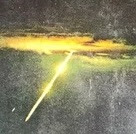
Christopher Nolan's film Oppenheimer is based
on the Pulitzer-prize
winning book American
Prometheus by Kai Bird
and Martin J. Sherwin.
I've been sharing with colleagues the suggestion that the release of the new film about the leader of the atomic bomb project, J. Robert Oppenheimer -- Oppenheimer, directed by Christopher Nolan -- is an opportunity for preaching and faith discussions on vital issues. (See full announcement below.)
What am I hoping for? This morning it dawned on me: the reason I think this is such an important opportunity is, "Maybe the Kingdom of Heaven is at hand when everybody has a conscience and stops being a gadget."
The story of Oppenheimer is the battle within J. Robert Oppenheimer between what he felt he wanted -- to do an amazing thing, to have glory, to have power -- and what his conscience told him was important: to lead people away from their destructive impulses. Oppenheimer was responsible, more than any other person, for the successful creation of nuclear weapons. But he also was the most stubborn voice calling for the renunciation of those weapons. And he paid the price for it.
What might happen if people come away from Oppenheimer saying, "This is not about somebody else, and some other time -- this is about me, this is about now!" -- ??
A few years ago I wrote a post about how often we surrender ourselves to the agenda or program or ambition set by others, and before we know it our only choice is to keep "going along" -- "In Whose Machine Will YOU Be a Cog?" In a way, Oppenheimer is about the battle against just being a cog in the machine, just being a "gadget." The call to action in the title of Jaron Lanier's book, You Are Not a Gadget, comes to mind -- as does the irony that the nickname of the first bomb developed in the Manhattan Project was "the gadget."
There's no telling exactly what will be in the film ... or how people will react to it. But one thing is certain. Oppenheimer: "That'll preach ...."
Oppenheimer: A Summer Blockbuster Offers an Opportunity
What will you be preaching about this summer? What will you be discussing in small groups? There will be an opportunity to “preach into the moment” when a unique cultural event occurs this summer with the release on July 21 of a major motion picture: Oppenheimer. The film is based on the choice to develop and use nuclear weapons as told in the book about the Manhattan Project leader entitled, American Prometheus: The Triumph and Tragedy of J. Robert Oppenheimer.
The $100 million production promises to deal issues of faith and conscience, and to stimulate a national conversation on dangerous technologies and social practices – nuclear weapons, but also AI and all environment-threatening behavior. “We imagine a future, and our imaginings horrify us. … I don’t know if we can be trusted with such a weapon. But we have no choice. Is anyone ever going to tell the truth about what’s happening here?” says Oppenheimer in the film’s trailer.
The mid-summer release is timed to coincide with the anniversary of the first atomic bomb test (“Trinity” – July 16, 1945) and the use by the United States of atomic weapons against Japan weeks later (Hiroshima on August 6 and Nagasaki on August 9).
This morning I came across notes I made about a year and a half ago -- Easter, 2021 -- of another dream of that type:
detail from cover of LIFE Magazine, 9/29/1967: "The chilling facts behind the decision to build the ANTI BALLISTIC MISSILE"
I am walking with some people – we look up in the sky and see a bright spot in the night sky coming toward us.
We realize it is a (nuclear) missile and try to run from the point of impact. ( … through … ? … I guess that means running from the city center.)
We reach a place where there is a shopping mall. It’s unclear that’s a good place to seek shelter, but we go in.
Up and down within the shopping mall complex.
When we venture out, there is white powder on everything.
We begin the long trek – to what?
There is a moment when we must pick a direction. Someone wants to head toward NYC. I say, “No – we will just run into the river with no way to cross. We should go north – towards upstate NY.”
We follow the highway.
It makes me wonder: (a) I think about the problem of nuclear war constantly. I'm surprised that I don't have dreams like this more often! (b) Are other people having dreams like these?
In the summer of 2018, I enjoyed a wonderful visit to the coast of Oregon.
I have long wanted to show all of the photographs of marine creatures we observed while tide-pooling, and the pictures of the fresnel lens from the Yaquina Point Lighthouse, and the sea lions surfing at Cape Arago! It was one of those places where, even before you left, you found yourself planning your next visit; all you want to do is get back again and spend more time there.
Oregon coast - Summer 2018
Sometime after that visit, however, I read about the Cascadia Subduction Zone and the accompanying earthquake and tsunami risk, and I have now come to realize that what I need to show is a different set of images. I have been writing a lot about how bad we are at thinking about catastrophic risk, especially as it relates to nuclear weapons risk, and it seems to me that the Cascadia tsunami risk could be instructive to think about in this context.
Many people became aware of the risk associated with the Cascadia Subduction Zone by reading a 2015 New Yorker article by Kathryn Schulz, "The Really Big One." In it, Schulz describes the peculiar geologic plate characteristics of the Northwest United States coast, the way it leads to catastrophic tsunami risk, the evidence that has been amassed that such events will happen periodically, and the scale of death and destruction likely when human populations are in their path.
The article had a big impact, I think, because people reading it asked themselves, "How could I have not known about this?" -- and then, "I had an idea about earthquakes but this goes way beyond that!" -- and then, "Do I really want to make that trip to Seattle?"
Graphic from Oregon.gov public safety comic entitled "Without Warning"
For those of us who benefit from seeing moving images, the documentary, "Shockwave: Surviving North America's Biggest Disaster," provides excellent footage of the simulations that scientists and public safety officials in the Pacific Northwest are doing to try to protect populations there. A brief (and rather understated) version of this information is in the video below from Oregon State University:
I think it is significant that there is a consensus that over a time horizon that people can imagine -- the next 50 years -- there are odds of this catastrophic event -- about 1 in 3 -- that feel very real. It is interesting to think about what we might do differently if we were able to specify and quantify nuclear weapons risk in the same way.
There are three other things I think are important about this, particularly with regard to thinking about other hard-to-conceptualize catastrophic risks, such as nuclear weapons risk.
(1) Our existing institutions are insufficient.
There is great work being done by scientists to quantify and otherwise define the associated risk, and by public safety officials to try to get people to prepare. The data has only become clear in recent years, and they are moving as fast as they can. Nonetheless, in our system of social organization, they cannot force anyone to get out of harm's way.
In particular, people's love of the ocean and the tendency to congregate in large number in low-lying coastal areas tend to undermine all of the efforts of scientists and officials to shoo people out of harm's way.
If scientists and officials emphasize the worst scenario, people accuse them of scare tactics. If they emphasize lesser scenarios, people say, "Well, I can handle that!"
(2) Our minds reject the horror associated with this risk.
When I was in Oregon, I saw tsunami evacuation signs like this:
Tsunami Hazard Zone warning sign (via OSU's Hinsdale Wave Laboratory)
At the time I thought that meant I might need to be sure to move a few feet inland or I might get my feet wet.
I now know that it referred to risk of the kind Schulz described in that original New Yorker article:
A grown man is knocked over by ankle-deep water moving at 6.7 miles an hour. The tsunami will be moving more than twice that fast when it arrives. Its height will vary with the contours of the coast, from twenty feet to more than a hundred feet. It will not look like a Hokusai-style wave, rising up from the surface of the sea and breaking from above. It will look like the whole ocean, elevated, overtaking land. Nor will it be made only of water—not once it reaches the shore. It will be a five-story deluge of pickup trucks and doorframes and cinder blocks and fishing boats and utility poles and everything else that once constituted the coastal towns of the Pacific Northwest.
I don't want to picture what this would look like. The State of Oregon has provided assistance in some of its public safety literature:
Or, you can check out another video -- it's got a goofy premise ("What If You Tried to Surf a Tsunami?") but it actually compiles simulations that seem to more closely match the conditions being described by Schulz:
(I notice the video with the goofy premise has been watched by over 6 million people, so maybe that's the way to get the word out . . . . )
I try to imagine myself confronting a tsunami wave like that. Then I try to imagine myself explaining to myself why I put myself in the way of that wave, even after I had known about the risk.
I often go to bed at night thinking, "Is it really true that I could wake up in the morning and hear that it finally happened? And that far from being able to be warned eight hours in advance, in fact, as a little as a few hours or minutes beforehand there would be no warning?" And I wonder how I would go to sleep if I lived there.
(3) People are stubborn.
There is something about having a home or other structure that makes people resistant to change. I remember watching a documentary about the consequences of Hurricane Sandy in which an official commented upon the reflexive response to "Rebuild!" after natural disaster damage, instead of moving out of harm's way. How much more so do we resist retreat when the risk all lies in the future?
In our society, we tend to say, "everyone's entitled to their opinion," and "we can't tell people what to do." But it seems to me there's an enormous moral hazard generated by our tolerance of the stubbornness of people with respect to certain catastrophic risks. This is especially so when the society as a whole helps bear those risks.
I wonder what might be different about the efforts to protect against nuclear weapons risk if we could learn from the efforts to protect against tsunami risk in the Pacific Northwest, particularly:
(1) Not waiting for institutions to make sure we're protected.
(2) Facing up to what the horror would really look like.
(3) Start asking questions about the naysayers - who will pay the price when the worst really does come to pass?
Now, some have argued that our major weakness to date has been the absence of a suitable spokescat. There was a time when I simply didn't believe this, but I have at last taken this point of view to heart, and after a long series of interviews above have arrived at a provisional arrangement for representation with the feline pictured above.
The problem with getting into bed (so to speak) with a cat is that you can't avoid being subjected to their opinions. This particular cat -- who began referring to himself as "Nine" after viewing a popular series on Netflix -- has many opinions.
Before I had known Nine for very long, Nine began insisting that even if people aren't thinking about the risk of nuclear weapons harm, they are all acting on it. "Consciously or unconsciously, everyone is making a bet on whether they are placing themselves in harm's way," Nine says.
"That's ridiculous," I said to Nine, when Nine first suggested this to me. "The problem is that people don't know enough about the dangers."
"Au contraire," Nine replied. "No one doesn't know about the nuclear arsenals that the US and Russia (and a few other countries) have aimed at each other. Every school kid reads Hiroshima . . . ."
"But if that's true," I said, "how come they're not all working for nuclear disarmament?"
"Because they've placed a different bet," said Nine. "For every one person who's placed a bet on their personal ability to save the world by bringing about nuclear disarmament, millions have place a bet on spending as many of their days as they possibly can as far from trouble as they can get."
"You mean like somebody living in Arkansas with a fallout shelter in the backyard?"
"Well, far away from the National Command Center as possible, anyway?"
"National Command Center?"
"That's Washington, DC, to you."
"Okay, that's just crazy, because then how do you explain all the people who do choose to live and work in Washington, DC?"
"Look" said Nine, "there are all kinds of bets . . . . "
I must have looked glum, because then Nine said, "Hey, cheer up! The important thing, as far as you're concerned, is that whenever there are people making bets, at least some of them will be looking for ways to hedge their bets!"
"What are you talking about?" I said.
"Well . . . ," Nine continued, "I haven't worked out all the details, but there have got to be some ways to help people hedge the risk that they've exposed themselves to by living in a place that's economically robust but too dangerous ... or by living in a place that is safe but too remote. I've already got a name -- Catsense (TM) -- and a slogan: "Because you only have one life to live .... "
Nine years ago I wrote a post about a lesser-known concept in Orwell's 1984 -- "ownlife" -- and how it might relate to a life of political activism.
In short, I suggested that the minute we start to take time for ourselves -- time to reflect, time to heal, time to grow -- we begin to have more power as activists (and begin to be more threatening to the state).
An activist friend of mine talked this morning on social media about some of the dreams he has been having. It seemed like a good time to share something that's been developing with me:
"In the past few years, I've written more and more of my dreams down. I now set aside quiet time alone each morning to do it, and also to reflect. It is astonishing to me how clearly and completely I can remember the contents of dreams ... sometimes ... but other times, as I turn my waking attention to some little thing, the dream vanishes!"
My friend had used an expression -- "like trying to hold onto wisps of fog" -- that seemed to me to exactly capture that last-mentioned phenomenon.
At first, I just focused on recall: how much of the dream could I remember? To my surprise, I found that if I had just a small "hook" to remind me of the dream experience, and if I relaxed, it would all come back at great length and in startling detail.
Soon I realized that it was fun to notice the little tidbits from the previous day(s) waking experience that formed the raw material or props of the dream. I'd write that down, too.
Occasionally, it seemed pretty obvious that the dream was about something I was wanting or needing or wishing for. And so that is another thing I've started to jot down.
Sometimes I even have very clear visual impressions from the dream. I do a little sketch of that.
The path one dream followed
After a long time, I started a practice of going back to the pile of notes of past dreams and transcribing them onto my computer. I noticed three interesting things.
First, often when I read the notes from a dream that I had years ago, I recall it with crystal clarity.
Second, there are certain motifs or tropes that recur. (For instance, bizarre elevator rides.) I've started to make a list of these recurring tropes in my dreams, and I'm discovering that the list is getting longer and longer!
Third, even if the dream didn't seem to mean anything at the time, after returning to it at a later time, perhaps coming at it from a different mood or with a different attitude or outlook, it can often seem quite meaningful in the new light.
They say that our sleeping time is full of dreams, and that we only ever remember a tiny fraction. As I look back over the "haul" of notes on my dreams of the past few years, and realize it's just a drop in the bucket compared to everything my brain is working on, I can't help thinking, "You're working very hard, little brain! Thanks for all that effort you're making!"
One dream had a jar of paint in a distinct burgundy color. (What's up with that?)
As for my assertion from nearly a decade ago -- that taking time for "ownlife" gives us more power as activists and makes us more threatening to the
state -- I don't yet have an assessment vis-a-vis the impact of my own dream work. I'll need to devote some time to reflect on that. (Maybe I'll even dream on it.)
One of the earliest posts I wrote on this blog as about how technology -- particularly drones -- have put us under the the gaze of the state in a way we thought was only possible in science fiction: "Drones, 1984, and Foucault's Panopticon." I've written a lot more about drones, 1984, Foucault, and surveillance in subsequent posts.
Since that time, I've also internalized what I understand to be Foucault's central premise: the temptation to have power over other people is enormous, and it's particularly difficult to resist when it is accomplished in the guise of something else, something that we tend to consider very positive -- observing, comprehending, recording, organizing.
That has spiritual implications at the level of individual experience -- the observing, comprehending, recording, organizing that we do as we seek to navigate the external world -- and that is something I plan to write about in a future post.
But it also has implications for the ways in which we are subjected to observing, comprehending, recording, organizing. I've become more and more aware of the way that the many tiny bits of data that we now slough off each day, like so many dead skin cells, add up -- in the hands of large computer operators (Big Data) -- to terrifyingly complete and intimate pictures of our personal lives.
Some time in late 2020, I watched the documentary, The Social Dilemma, on Netflix: "This documentary-drama hybrid explores the dangerous human impact of social networking, with tech experts sounding the alarm on their own creations." The whole documentary is insightful, and the commentary by Jaron Lanier is particularly good. My key takeaway from that documentary was: don't talk about "if" artificial intelligence (A.I.) takes over, as if it is something in the distant future; AI is already operating on us in the form of the social networks that we participate in day after day.
What I've particularly struggled with since then is this: how can we ordinary people use social media to benefit us, without all of it falling into the maw of A.I.?
It made me think of this picture that one of my kids drew when they were about three (above).
(At the time it was amusing, and my main feeling was pride at how clever my child was. It reminded me of Grendel, and I wondered if they had been reading Beowulf behind my back. Now I'm more terrified .... )
The thing that is so painful is that, each day as any of us interacts with Facebook, Twitter, Instagram, Linkedin -- or even this blog -- not to mention every Google search or credit card purchase, we are not being strong-armed into coughing up our deepest secrets -- we're willingly surrendering them! (To quote Roy in the movie Matchstick Men, "You didn't take it. I gave it to you.")
So, yes, Foucault ... power, observing, comprehending, recording, organizing. Yes: drones. Yes: Big Brother; yes: surveillance.
But maybe the BIG question we each need to ask ourselves when we wake up each morning is:
"How much – and what type – of data will I surrender today?"
How much brain space -- and what kind of brain space -- are we humans capable of giving to certain particularly horrific risks we face?
Sunset - Madeline Island - January 2019
During the 3-1/2 years I lived on Madeline Island, I took dozens of pictures of surreal, beautiful sunsets. But the one above was a little too surreal. When I saw it, I thought, "Could that be something awful happening hundreds of miles to the south of us, in the big cities of Madison, Milwaukee?"
It reminded me of a dream I had had a few years earlier, when we were still living in Berkeley:
Last night I dreamed that I was driving home into the Bay Area from a long trip, and I saw the mushroom cloud. ...
It had really happened. ... "What will happen now?" I wondered. "Will it reach us here?"
I didn't have a very practical idea of what to do ... other than to keep on going.
My dream from there: traversing unfamiliar terrain ... bridge out ... try to "get back the long way 'round" .... )
When I woke up from that dream, I thought, "I'm involved in activism on the issue of nuclear disarmament and I talk with people about it and think about it all the time; but I've never envisioned myself actually dealing with a nuclear detonation occurring near me." And then I thought, "Am I capable of treating it like the real possibility that I believe it is?"
I wonder if we are capable of treating the threat of nuclear weapons use like the real possibility that it is without shutting down intellectually and emotionally.
I'm thinking of this today because, as I unpacked papers in our new home in Madison, I found notes I had made about a piece of music: Symphony No. 15 by Dmitri Shostakovich. My notes reminded me that I have surmised that the clue to this enigmatic final symphony of his is that it has something to do with the fate of humanity in the face of the nuclear threat. I have nothing to base this on other than the "story" that the disparate parts of the symphony speak to me. In particular, the last minutes of the symphony seem to come down to the sound of a clock ticking . . . and then silence. (The way it ends with a whimper, like the sound of time running out, reminded me of the climax of a later work -- the opera Dr. Atomic, by John Adams -- in which the Trinity test is about to happen and time e-x-p-a-n-d-s . . . . in an excruciating type of anticipation: what will the future hold - if anything?)
Shostakovich wrote No. 15 in the 1970-71 period, coinciding with the SALT talks on arms limitations. It would not be unreasonable for the issue to have been on his mind at the time.
Once I start thinking in this way, I hear all kinds of things in the course of the symphony: skeletal xylophones, a game of "chicken" evoked with the William Tell Overture, martial music, circus music, a piccolo "whistling past the graveyard," a funeral chorale, a dirge, a desolate landscape, funereal and tentative steps, a heavy quote from the Ring Cycle (is it the "fate" motif?), followed by a very light air that seems to say, "La-di-da, life will go on as usual," then stress, trudging, plodding, ... finally blaring brass and then that ticking clock.
Besides the Adams piece referenced above, I think the piece also has connections to the stormy Dies Irae in Verdi's Requiem, and to Britten's War Requiem. (A friend of mine has also suggested I compare it to Threnody to the Victims of Hiroshima by Penderecki.
Shostakovich was depicted on the cover
of TIME magazine wearing his firefighter's
helmet during World War II.
It's almost certainly impossible to come up with "proof" about what Shostakovich intended with this symphony, and, if it were possible, that proof surely be subjected to all of the same doubt and refutation that every other aspect of Shostakovich's thinking has been.
What seems more important is what it means to me to find this meaning in the music. Why do I connect these abstract musical signals to this particular issue, the issue of nuclear weapons threat?
I think we need works of art -- just like we need dreams -- to help us work through the things we can't bear to position too concretely, too explicitly, in front of our eyes, full-on, in bright light, with sharp definition, at least not all the time.
Maybe Shostakovich 15 has no direct utility to offer in the effort to avert the harm we face from nuclear weapons. But I do know that it -- like many other works of art -- serves to help at least one peace worker to continue to struggle to work through in his mind what to do about this staggering problem that we face.
Speaking of minds and imaginations, perhaps if I had more courage, I would follow through with my plan to concoct a Gogolesque tale of finding a yellowed letter tucked into a mildewed copy of Testimony in forgotten used bookstore in far northern Wisconsin . . .
You have asked me about my intent in writing my 15th. Many people have remarked (rejoiced, even!) that I had not written another "programmatic" symphony. They're tired of my commemoration of historical events.
They're right - 15 is not about an historical event, not really. But it IS about a true event. Even though it still lies in the future, is there any doubt that it IS going to happen?
It started with a dream. You know I visited Berkeley . . . .
But who knows where that might have led?
Below is a link to the final movement of Symphony No. 15 by Dmitri Shostakovich. What do you think?
At this writing, it's been viewed by over 880,000 people.
Three quick thoughts:
(1) Does New York City have a "Back From the Brink" resolution, like Chicago? It's good that they recognize the danger; how about advocating for the kind of change that could reduce the risk?
(2) It's good that 880,000 have now been provoked to think about the reality: as long as the current global nuclear weapons regime continues as it is, New York City and everyone who lives there is extremely vulnerable.
(3) Maybe New York City should be promoting a different message. Many experts say that encouraging people to think that they will be able to escape in the event of a nuclear attack is irresponsible, and that the responsible thing to do is alert people to the reality that the only way out is prevention.
This decades-old video is still the best thing I know for "getting real" about the danger associated with nuclear war for large cities:
This spring, I visited the Chicago History Museum and spent some time looking at the exhibit about the Great Chicago Fire -- City on Fire: Chicago 1871.
I was struck by the resonance of many of the objects and images with what I saw in the museum in Hiroshima when I visited there in 2015.
I have been reading a very good book: Cyber Threats and Nuclear Weapons by Herbert Lin (Stanford, 2021).
It is filled with good stuff.
Lin's conclusions, however, reflect a big mistake, in my opinion. As I read section Chapter 6, "Designing the Cyber-Nuclear Future: Observations and Imperatives," I thought, "This is exactly how a determined problem-solver goes at it: call out the main features, and take your best shot at limiting the possible damage associated with each." But something was nagging at me. This reminded me of something, a warning I had once heard about entrusting problems to people who assumed there was a solution.
Then I remembered: it reminded me of the testimony by Richard Feyman before the commission investigating the Challenger Disaster. This testimony has been described at length by Edward Tufte in his book, Visual Explanations. The thrust of that testimony, as I recall it, was that the colossal failure of the Challenger launch was because everyone who was looking at the conditions at the time was doing so from inside the paradigm of problem identification and mitigation, rather than willingness to acknowledge the possibility of total breakdown.
Herbert Lin has exhaustively documented the ways in which cyber threats probably make it impossible for nuclear weapons to continue to be exist without, sooner or later, a colossal failure. The question is: who has the authority to step outside the existing paradigm and deal with the consequences of this unfixable system? (To use the words of Tufte, to do the proper risk analysis -- from the outside in -- rather than "pitching" -- from the inside out.)
Cyber threats to the nuclear weapons complex call for Homeland Security committee investigation. Imagine Congressional hearings on this -- perhaps not from the standpoint of the military (Armed Services) or diplomacy (Foreign Affairs), but from that of Homeland Security.
The moment you visualize the effects of it on an actual place (that is real to you) -- as an actual eventuality that is really possible -- the topic of nuclear weapons becomes completely different.
For those who live in my former hometown, it's startling to realize that a metropolitan area like Chicago could be wiped out by a nuclear weapon.
Silent March against Racism in Bayfield, Wisconsin, July 4, 2020
Yesterday morning -- the Fourth of July -- we participated in an important event in Bayfield, Wisconsin, the mainland community closest to Madeline Island. It was a Silent March against Racism organized with the help of area churches and members of the Red Cliff band of Ojibwe.
In the evening, we watched the great 1983 film, Born in Flames. The film imagines the possibilities for a small band of activists who are determined to change the world.
In the film, there was a 3 second snippet of a song I recognized from my teenage years. "That's Hendrix!" I said to Rachel.
The Hendrix song was "Voodoo Chile" - a song I used to hear every morning as I listened to Jimi Hendrix' album, Hendrix in the West. Here are the lyrics:
Well, I stand up next to a mountain And I chop it down with the edge of my hand Well, I stand up next to a mountain Chop it down with the edge of my hand Well, I pick up all the pieces and make an island Might even raise just a little sand 'Cause I'm a voodoo child Lord knows I'm a voodoo child
I didn't mean to take you up all your sweet time I'll give it right back to you one of these days I said, I didn't mean to take you up all your sweet time I'll give it right back to you one of these days And if I don't meet you no more in this world Then I'll, I'll meet you in the next one And don't be late, don't be late 'Cause I'm a voodoo child Lord knows I'm a voodoo child I'm a voodoo child
When I was 13, I found the lyrics of "Voodoo Chile" very mysterious. (Particularly in comparison to the words of "Red House" -- "There's a red house over yonder, that's where my baby stays . . . ." -- or "Lover Man" -- "Here he comes, baby, here comes your lover man.")
But something clicked yesterday hearing the words "I stand up next to a mountain, chop it down with the edge of my hand" in the context of the day -- the Bayfield march (where we saw people committed to anti-racism stream into the lakeside park from all directions) and of Born in Flames (a film about committed revolutionaries). I suddenly thought of a passage from Matthew (17:20) that we had been reading a few weeks ago, in which Jesus says:
"For truly I tell you, if you have faith the size of a mustard seed, you will say to this mountain, ‘Move from here to there,’ and it will move; and nothing will be impossible for you.”
When we reached that passage in our Bible study group, one of the participants called our attention specially to these words. She said that statement felt more true to her than a hundred other pious pronouncements of the Church.
"I stand up next to a mountain, chop it down with the edge of my hand."
A detail that caught my eye: the footage of firemen wearing their crested helmets:
It made me think of this TIME magazine cover featuring Dmitri Shostakovich (suggesting his heroic role rallying the country both as both composer and firefighter):
It made me wonder about the function of the thing on top. (I figured out it's referred to as a "crest.")
I started to poke around and discovered that it's a common feature of firefighters' helmets. Does it serve a purpose, or is it just decorative?
The impression I get is that the crest is intended to cow opponents.
This morning*, I remembered that my sister had dubbed a cardinal that visited her yard "Menelaus." Cardinals do look like helmeted warriors! (*perhaps because yesterday we spotted a male cardinal in our yard - not that common up here in northern Wisconsin!)
As I am writing this, I am remembering the costumes in the original Fahrenheit 451 film, the helmets of which included just the hint of a crest:
(That's Oskar Werner in the role of "fireman" Guy Montag. A long way from Jules and Jim* !)
* LOL ... I'm referring, of course, to the film ... though I was probably also thinking of the pair of hummingbirds my sister called by those names! :-)
The image above is, perhaps, the iconic example of the thinking of Edward Tufte. It stands for the proposition: you can use graphics to help people greatly increase their perception of what is going on with a numerically dynamic situation -- the key is to use the plane of the paper to capture the interaction of multiple dimensions simultaneously.
This image illustrates four dimensions together: the size of Napoleon's army as he marched toward (and then away from) Moscow during the War of 1812, the location of the army, the time, and the weather conditions. One can instantly get the picture: an overwhelming force, heading off to fight in Russia, full of confidence and bravado, only to find itself retreating as it is annihilated little by little by cold and hunger and disease. (More about this image on Edward Tufte's website.)
Tufte says, in essence, that we remember to make the fullest possible use of our visual and spatial intelligence. Sure, text and stories are useful; but how about drawing me a picture? (To me, the position Tufte advocates resonates strongly with Gardner's theory of multiple intelligences.)
I've been thinking about this particular image for a long time, since I first encountered it when I was in college in the late 1970s. Then, recently, several elements presented themselves to me.
The first is a chart of the pace of nuclear disarmament, showing the advance toward a peak US nuclear weapons arsenal in the 1960s and then progress -- in fits and starts -- in reducing that arsenal:
The second has been the increased attention that I have begun to give to NATO and the idea of Central Europe as the front line of nuclear confrontation. I read several books by Timothy Snyder, and realized that the bone of contention is an area of land that lies between Germany in the west and Russia and the east -- a place about which most people in the US have only the vaguest notion.
Since I first visited Berlin, Prague, Budapest, and Vienna in 1990, I have been fascinated by a sort of terra incognita that lies between the known West (France, England) and the Otherin
the East (Russia, China) -- a zone that is at once vaguely charming and
vaguely menacing. I suppose I should get serious about understanding
it; but there is also something appealing about letting it remain
mysterious -- a Mittleuropa whose reality and destiny we can leave to someone else to worry about.
I had my "Tufte moment" when I read about a visit by Senator Sam Nunn in 1973 to meet with NATO commanders in Europe. Nunn was stunned to learn that the military assumed that they would use nuclear weapons if there were a fight in Europe. They had scoped out the geography (the chokepoint is a place called the Fulda Gap) and they had run the numbers (150,000 NATO troops vs. 450,000 from Warsaw Pact countries). "The invasion route would put the Warsaw Pact forces quickly within striking distance of Frankfurt and several large American military bases." (Philip Taubman, The Partnership: Five Cold Warriors and Their Quest to Ban the Bomb, p. 198 ff.).
It seems to me that there needs to be an infographic --
analogous to the one of Napoleon's army - that conveys the state of
affairs in Central Europe, and how it is controlling our destinies.
Perhaps an ingredient that would be helpful would be the events of the
1980s centering on the deployment of Pershing II and SS-20 missiles (see
Taubman, p. 230).
An infographic illuminating the historic nuclear confrontation in the center of Europe - this would be a timely inquiry. The US has pulled out of something called the Intermediate-Range Nuclear Forces Treaty (INF). Most people -- including myself -- struggle to understand what's really at stake.
Maybe it's time for someone to draw us a picture.
Postscript
I was stimulated to finally post this note because I had to look up an unfamiliar word -- anabasis -- used by my son in describing the film, Apocalypto. "Anabasis" means both a military advance and a a difficult and dangerous military retreat, and the graphic that Tufte touted came to mind.
By the way, proponents of greater attention to another one of our multiple intelligences -- musical intelligence -- might note that the graphic about the War of 1812 is mightily complemented by one of the great works in our classical music canon: Tchaikovsky's "1812 Overture." But that is a blog post for another day . . . .
One day the problem seems very distant. "It couldn't possibly have anything to do with me."
Then the next day everything has changed, and you see the situation with utter clarity.
I think, for myself, of the difference between Friday, March 6, and Saturday, March 7.
We don't like to contemplate that there can be massive breakdown in the fabric of our lives. Public health experts and scientists have been warning loud and clear about what we face (in terms of infectious disease, in terms of climate, in terms of nuclear weapons) -- and yet we just can't seem to bring ourselves to prepare, and to change our risky behaviors. And then suddenly -- when we come right up to the brink of dying -- we realize, "Oh! I guess I am willing to make the effort. I guess it really is possible to behave differently. We can do this!"
Toshiro Mifune in Red Beard, a film by Akira Kurosawa
I am coming around to thinking that the greatest film Akira Kurosawa ever made was not a samurai epic, but the fable about strong compassion called Red Beard.
The story centers on two doctors. One is the 19th century equivalent of a newly minted medical school graduate -- in this case, someone who has had the benefit of "Dutch learning" in Nagasaki, and has now come to Edo (Tokyo) to be the shogun's doctor. The other, nicknamed "Red Beard," is a senior doctor who runs a clinic that principally caters to the poor. The older doctor appears to be a bit of a tyrant, but it is soon revealed that his priority is all-around well-being of the community.
The proud and self-promoting young doctor changes as he witnesses the behavior of the devoted older doctor.
The particular genius of Kurosawa is to show that Red Beard can be both unbelievably compassionate, and also strong and tough in a conventional sense. An example of the former is when he patiently tends to a young girl who has been traumatized by ill-treatment and repays his kindness by lashing out. An example of the latter is when Red Beard single-handedly defeats a gang of ruffians guarding a brothel. (Later, he rues his own behavior. "This is bad. A doctor should not do this.")
One after another, the people in the film seem to be "infected" by the compassion that Red Beard demonstrates. It is a veritable "cascade of compassion."
One of the very first blog posts I ever wrote was about the problem of violence, and whether mere "nonviolence" is an adequate counterweight to it. I wondered if we don't need to go beyond nonviolence to compassion. "It seems to me," I wrote, "that compassion is something that, once experienced, tends to become contagious." (See Is the Opposite of Violence Non-Violence? Or Is It Compassion? )
I continue to think a lot about how violence is "contagious," and how we can find a similarly "contagious" antidote. (See Violence: Taking Over Like a Virus )
In an excellent chapter on Red Beard in The Films of Akira Kurosawa, Donald Richie writes, "One can see what Kurosawa has had the bravery to do in this film. He is suggesting that, like the hospital, the world in which we live may indeed be a hell but that good, after all, is just as infectious as evil."
I wondered yesterday: is it possible that the world -- the environment, the climate, Nature -- has sensed that we need to slow down, and that it has been sending us a message?
In other words, the challenge here is not to save the Earth from being "damaged," but to rescue human lived experience from becoming hopelessly sped up and commodified?
I was on a phone call with a group of environmental activists, and someone shared a reflection entitled, "What Can the Trees Teach Us" by Nichola Torrbett. "As far as I could make it out," she wrote, "the immediate message is SLOW DOWN."
We remarked on the irony that humans have had a very hard time listening to other humans suggest that we need to slow down; the message from the atmosphere has not been able to quite register, either; but now a microscopic bug has seems to be getting through to us.
Later, I reflected on how this has operated in my own life. I remembered a moment, sitting in a train car as it zoomed through the state of New Jersey, realizing that no matter what was happening in my life I always felt better when I was moving.
I remembered an essay in a collection on my shelf, and pulled it down to read again. In 1906, Henry Adams wrote about how life seems always to be getting faster and faster. Looking back on his own time, he observed "[b]efore the boy was six years old, he had seen four impossibilities made actual, -- the ocean-steamer, the railway, the electric telegraph, and the Daguerreotype; nor could he ever learn which of the four had most hurried others to come." (From "A Law of Acceleration")
And today that seems quaint.
When I was a teenager, the big bestseller was Future Shock by Alvin Toffler. I was amused to discover that twenty years later, it became a bestseller in Chinese translation in the bookstores of Beijing and Shanghai. The book is, in a way, an extended updating on Henry Adams' observations: the biggest change is the accelerating pace of change itself.
There was a wonderful show at the Guggenheim Museum in New York a few years ago, about the Futurist movement of the early 20th century. The Futurists sought to make a virtue of this acceleration of society -- with consequences that were partly entertaining and partly terrifying. (See What Kind of Future Comes From Worshiping Speed, Machines, Flight, War?)
I wrote once before about the need to slow down in a slightly different context: talking about the concept that George Orwell wrote about in 1984, "ownlife." That was when I began to see what a huge effort is needed to slow down and choose where to put one's own attention.
For the rest of this year (at least), the pace of our lives will be changed for us. What will we learn from the experience?
We're all trying to wrap our heads around COVID-19 and the mathematics of epidemics.
There was a very good piece by Nick Kristof and Stuart A. Thompson in The New York Times that uses an interactive graph to help one understand how the numbers behave: "How Much Worse the Coronavirus Could Get, in Charts."
I've noticed that all of us have a difficult time sorting out the risk we face individually from the risk to society in aggregate. The problem seems to be that our minds have trouble holding different categories of numbers at the same time.
A related problem is what we are willing to think, and what we feel comfortable saying in conversation with other people.
I made a note of another article that appeared in The New York Times - "Why Did the Coronavirus Outbreak Start in China?" by Yi-Zheng Lian. Lian argues that things got out of hand because of a cultural tendency in China to defer to "the official line" -- or, more to the point, the fear of punishment meted out to anyone who contradicts the official line. Lian writes, "Punishing people who speak the truth has been a standard practice of China’s ruling elite for more than two millenniums and is an established means of coercing stability. It is not an invention of modern China under the Communists — although the party, true to form, has perfected the practice. And now, muzzling the messenger has helped spread the deadly COVID-19, which has infected some 75,000 people."
I have become very wary of broad brush characterizations of peoples and nations. (I come by this wariness honestly, as a recovering Orientalist.) But I was struck by echoes I found in Lian's article of a post I wrote about a decade ago about how the Chinese context sets up a "prisoner's dilemma" that squelches independent voices and independent action: "Merry Christmas, Mr. Liu: The Prisoner's Dilemma in China."
Coincidentally, a few weeks ago I watched an online lecture about the years leading up to World War II in the Pacific. Prof. Mark Ravina makes the case in "War Without a Master Plan: Japan, 1931-1945" (Lecture 19 in Understanding Japan: A Cultural History) that something similar was operating in Japan at the time: the facts showed plainly that Japan was embarking on a path that was doomed, but there was a cultural tendency to acquiesce to what was believed to be the group's overall view. No one wanted to dissent.
Groupthink: the same phenomenon that we see in Florida today, where no one dares utter the words "climate change."
We are all huddled in our homes now. We have a lot of time to think. We have grown tired of watching the same talking heads on the TV news shows. We have begun to reflect, and to have heart-to-heart talks with people we can really level with. And some of us are even beginning to think that maybe we really can live our lives differently.
There isn't a day that goes by that I don't tell someone about how they can watch great films on Kanopy.
Kanopy is a film streaming service that people from many communities can access free using a local library card or university ID.
I've discovered that many of my favorite films are available on Kanopy. (And I've discovered many, many more films I didn't know about -- along with tons of documentaries and educational materials.)
Here are a few of my favorites -- together with blog posts I've written, where relevant.