Showing posts with label technology. Show all posts

Wednesday, December 28, 2016

A Globally-Connected Peace Movement: What's Stopping Us?

The biggest obstacle to a truly global peace movement may actually be the structures upon which we've leaned for so long . . . .


A globally connected peace movement?


I wrote several weeks ago suggesting that the "Internet of Things" could be a useful framework for thinking about how to network the global peace movement.

To accomplish this, I think we will need to take a step back from things (devices) and even programs and data structures, and begin with the question: what is the problem we might hope to solve?

I was reminded of this in a community organizing meeting recently, when the participants quickly got off and running with talk of websites and databases and user accounts and administrators, and lots of ideas about what we could do, until we realized we were all talking about different things because we had not yet reached a shared statement of what the problem was that needed to be solved.

In my earlier post, I referred to the nuts and bolts of peace work -- the conceptual components, or what computer science people sometimes call "objects." For a long time, much movement activity -- at least the most organized parts of it -- has centered around a few objects: organizations, campaigns, supporters, actions. For a long time, these were the objects that the available technology could best support. (To a person with a hammer, every problem looks like a nail.)

I have noticed that more and more people are finding the strength in peace and justice work that is found in affinity groups. That seems to me to be a reminder that the formal attributes of (often rigid and relatively static) organization are actually less important than the powerful benefits that people get from informal, flexible (and often highly dynamic) affinity.  I think there's a lot more to be said on this subject.

For now, I'll tee up a proposal for what is the problem we might hope to solve:

how might we help people to
maximize the benefits of affinity,
while minimizing possible costs or burdens?

(Put another way: how can our work for peace go viral, without getting bogged down in national or organizational or other differences?)


Vote on resolution to negotiate a ban on nuclear weapons in 2017 (L-41)
Green - Yes (123, 76%)
Red - No (38, 24%)
Beige - Abstained


Here's a practical example: peace advocates in every country in the world have the opportunity to work for global nuclear disarmament in 2017. How can we harness the available technology to get everyone plugged into what will necessarily be a massive effort? Many people will channel their efforts through the International Campaign to Abolish Nuclear Weapons (ICAN) and its partner organizations. But I think that's just the tip of the iceberg . . .

To be continued.

Please share this post . . .

Wednesday, December 14, 2016

How Does the "Internet of Things (IoT)" Bear on Global Peace Work?

Peace technology ("peacetech") will make its greatest contribution by applying the concept of Internet of Things (IoT) to global peace work, I believe.

Several months ago, I observed:

That part about "we're getting networked" is not just talk - I've learned more and more each day about the way people worldwide are using technology to connect the disparate parts of the peace community.

"I☮T" - Internet of Things for Peace
In my own work, I've been particularly interested in the role of web communications (think: blog posts about protests against drone warfare or protests against torture or protests against the occupation of Palestine or protests for fair wages or protests against nuclear weapons or . . . you get the point) in helping people connect across time and space. With this little thing called the Internet we are able to find each other and connect, even when we're not focused on the exact same task in the exact same place at the exact same time.

I see a connection between this phenomena and what technologists have come to talk about as the "Internet of Things (IoT)." The idea, as best I understand it, is that we recognize the immense power of connectivity, and use the devices available to us to shift the paradigm:

OLD APPROACH:

do something
  ( then maybe remember to tell the story )
   (( then possibly get heard ))
     ((( and influence the person doing the next thing ? )))

NEW APPROACH:

do something and simultaneously transmit the story, simultaneously getting heard (and influencing?) others

(You can read a more formal definition of the "Internet of Things" on Wikipedia.)

Often we think of IoT in terms of the "T" - things like toasters that can talk to your alarm clock to make sure your breakfast is the perfect temperature when you reach the breakfast table. But I tend to think that the peace movement will find it useful to go up one level of abstraction and think about objects in a more conceptual sense -- "peace objects," if you will. That will enable us to see the information architecture, and from there it will be an easy matter to connect devices.

A peace object can be a demonstration, an essay, a poster, an act of civil disobedience. (For starters, we can include all 198 items on Gene Sharp's list of Methods of Nonviolent Action.)

We've already begun to see how Internet practice connects disparate peace objects. How many of us have used the hashtag #NoDAPL during the Standing Rock protests to connect with others?

A case in point: in 2017, people all over the world will be working in a concerted effort to realize a global ban on nuclear weapons. Will the IoT be harnessed to catalyze those efforts?

There is much more to be worked out about how the IoT can be used to spur the global peace work.

MORE: A Globally-Connected Peace Movement: What's Stopping Us?


Related posts

The strategic challenge we face is to wake up to the fact that -- globally -- we are pursuing peace work in diverse ways . . . and then figure out a way to take advantage of the inherent strength in the existence of these diverse approaches.

(See Global Peace Movement: Big, Networked, Diverse)


It is a stunning lesson in global civics to observe who voted "YES" and who voted "NO" (and also who abstained) on L.41 - "taking forward multilateral nuclear disarmament negotiations."

(See Who would possibly vote "NO" to banning nuclear weapons???)


What I'm feeling particularly energized about is the potential for the thousands of people who have already signed on as supporters of World Beyond War -- as well as millions more who are expected to do so soon -- to become active participants in spreading this good news.

(See News Worth Spreading: "There IS An Alternative to War!" )

Thursday, June 2, 2016

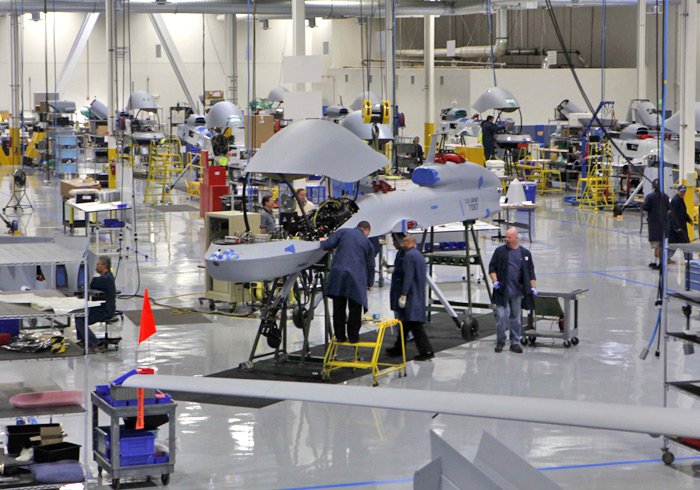
Worldwide War and Conflict (Brought to you by Silicon Valley)

Are high tech workers and communities adequately owning up to their responsibility in providing ever more lethal generations of weaponry and other war materiel?

Image from PC World: "DARPA, SRC pony up
$194 million to fund chip research"
I've been attentive to the predicament of technologists involved in providing the machines of modern war since I wrote about the Chicago scientists who played such a large role in creating nuclear weapons. (See Unfinished Business in Chicago (Nuclear disarmament, that is))

When I worked in the field of patent licensing about a decade ago, I had a crash course in the structure of the semiconductor industry, and a peek into how many semiconductors find application in the military field.  If I needed any reminder of this fact, I got it when the Secretary of Defense payed a high-profile visit to California a few weeks ago: "Pentagon Turns to Silicon Valley for Edge in Artificial Intelligence."

When we think about high-tech weapons, we often think of big stuff like fighter jets and drones. But none of today's weapons are possible without the semiconductors and software that make them smart.

In the California defense industry, Southern California has been where the military aerospace comes together. But all those Silicon Valley chip and software engineers in Northern California are the key link.

(I don't know how many people living in California's 17th congressional district, the Silicon Valley area represented by Mike Honda, think of themselves as dependent on the defense industry . . . . )

It's really a fascinating dilemma. "Hey, I just make this little part of the thing .... " The protestations of scientists involved in napalm production come to mind: "Hey, I just work in the quality control department .... " (See American Fire: Still Spreading, Still Inextinguishable)


High tech weaponry (last year's model).
There are some people inside the technology field who are starting to ask questions about engineers' involvement in supporting innovations in killing. Notably, the International Committee for Robot Arms Control consists of computer scientists, engineers, artificial intelligence experts, roboticists and professionals from related disciplines who have called for "a ban on the development and deployment of weapon systems in which the decision to apply violent force is made autonomously." (See also "UC Berkeley Professor Leads Call for Ban on Autonomous Weapons," interview of Stuart Russell by Michael Krasny, Forum on KQED, August 5, 2015. )

Autonomous weapons are the cutting edge. What would happen if people working in the tech industry said that they wanted to give all military applications a wide berth? What if they quit the weapons business cold turkey?

"Social responsibility" and "ethics" is a topic that appears to be just beginning to gain traction within the EE community. I note that an annual "humanitarian" conference associated with IEEE will take place again in October, 2016, in Seattle. (You can get a sense of the proceedings from the Global Humanitarian Technology Conference (GHTC) 2015 program book.)

Right now, "humanitarian" in the EE field seems to be associated principally with affirmative efforts -- providing energy, health, communications, education, aid and similar benefits. But what about ceasing to contribute to violence?

Can we see a clear path to enabling EEs to choose to work in weapons-free zones?


Related posts

In four hundred and thirty-five Congressional districts, there is an inseparable relationship between campaign funding for Congressional races and the military contractors. How do we push back?


(See IT'S A LOCK: Why the US Can't Break Its Addiction to War)


Met Lab scientists had a rude awakening: "We're interested in your technology, not your political advice." As one of the Met Lab scientists said, "I might as well have thrown those recommendations [about abstaining from using the bomb] into Lake Michigan."

(See Unfinished Business in Chicago (Nuclear disarmament, that is))


"Because of the intensified division of labor," the narrator explains, "many technicians and scientists can no longer recognize the contribution the have made to weapons of destruction." "Our department extracts lareic, oleic, and naptha acids . . . . "  "I'm a chemist. What should I do? If I develop a substance, it can be good for humanity . . . ."  "Besides napalm, Dow Chemical produces 800 other products . . . ." Does this familiar to you?

(See American Fire: Still Spreading, Still Inextinguishable

Monday, February 29, 2016

Does Society "Decide" to Engage in War?

I think if you asked most people, they would say that (a) war is deeply ingrained in society; and (b) society over and over again decides to engage in war.

There is a growing discourse around point (a): people are starting to unpack the idea that "war is deeply ingrained in society," and growing in understanding that this is not the same as saying "war is part of human nature."

I worry that there is less insight around point (b). At least in the United States, I think people continue to believe that war is a societal choice. I think this is not true.

In theory our Constitution is all about the people -- through Congress -- maintaining control over the decision to go to war. As it stands now, as a practical matter, that's not really what's happening.

I invite people to study the graph of historical US military spending below. It shows that there was a time when military spending went up when the US began to engage in a specific war, and then went back down after that war. Later, that pattern changed.


US Defense Spending -- FY 1800 to FY 2010
(More at usgovernmentspending.com)


It is very interesting to consider why this change occurred. (Perhaps that's a topic for a later blog post or two.)

But I think the more fundamental point is: at some point US society stopped being the "decider" about war. The US began to engage in war, and more war, and more war . . . but US society was no longer really making that decision in any real way.

(Think about US military action during your lifetime. In what ways, if any, did society at large determine what happened?)

If we confront this reality, what might this cause us to do differently?


POSTSCRIPT March 1, 2016: Yesterday the lead editorial in The New York Times called for a "better not bigger military", saying "[g]iving the Pentagon a blank check does not ensure security," and expressing hope that the next president will get the balance right. Isn't this just part and parcel of the charade that these questions are at all under the control of the US public?

Related links

"The US Military Is America’s 51st State" by William J. Astore in The Nation.


Related posts


More than anyone else, the beneficiaries of permawar are the politicians who thrive on the power to make and control wars. The number one prime beneficiary is the President, as well as presidential aspirants. But it doesn't end there . . . .

(See J'ACCUSE: The Beneficiaries of Permawar )


The decision about whether to live with the threat of nuclear annihilation is our decision. And that is why the entire country is mobilizing for mass action for nuclear disarmament in 2015. Are we capable of making sure the messengers -- Obama, Putin, the other agents of government -- hear their instructions from us clearly?

(See NEEDED: Heroes to Bring About Nuclear Disarmament )


Right now we're "stuck" -- the portion of the public that wants to cut military spending has hovered in the high 20%s since 2004; it just can't seem to break the 30% barrier. (The percentage of people in favor of expansion is about the same.)

(See Cutting Defense: Are We STUCK?


It's essential that we demand our members of Congress get on the record now about the opposition to U.S. military intervention in Syria that they are registering from their districts.

(See On Syria, It's Time for Congress to Remember Who They Represent)

Tuesday, December 22, 2015

The Problem With Technology: Nuclear Radiation Injury and the Need to Admit Our Limitations


Jacob Peter Gowy's The Flight of Icarus.


During my time at the World Nuclear Victims Forum in Hiroshima (WNVF) I was struck again and again my the central role of technology -- or, more specifically, our failure to recognize the limits of technology -- in creating a hibakusha phenomenon that is truly global in scope.

The 20th century was the century of science and technology -- a time of belief that we can use science to solve any problem. "Everything is manageable."

The 21st century is starting to look like a century in which we say, "Knowledge, logic, ingenuity? Yes, but . . . . "

I remember the situation of the scientists who worked on the Manhattan Project in Chicago, and who thought their "expertise" would earn them the right to be heard about how the atomic bomb would be used.  (See Unfinished Business in Chicago (Nuclear disarmament, that is))

I think of the acres and acres of bags filled with contaminated soil from Fukushima. (See Radioactive Waste: "What are you gonna do with it?" )

Svetlana Alexievich's Voices From Chernobyl: The Oral History of a Nuclear Disaster is replete with examples of how people in the Soviet Union thought scientists could make anything work. There was "the cult of physics" (p. 179) and everyone said "nuclear stations . . . they're safer than samovars" (p. 87) . . . "At school and at the university we'd been taught that this was a magical factory that made 'energy out of nothing,' where people in white robes sat and pushed buttons" (p. 164)

Why did that Chernobyl break down? Some people say it was the scientists' fault. They grabbed God by the beard, and now he's laughing. But we're the ones who pay for it. (p. 78)

"The scientists had been gods, now they were fallen angels, demons even." (p. 192)


Admitting our limitations

Dr. Hiroaki Koide
Dr. Hiroaki Koide provided sobering testimony during his keynote lecture at WNVF. He said that he had sought out nuclear studies in the belief that peaceful uses of nuclear energy for power could in some way compensate for the suffering caused by its military use [i.e. in the atomic bombing of Japan]. However, he said, he realized that that hope was "a mistake" . . . . He now realizes that there are no "safe" ways to "harness" nuclear energy.

(His statement had echoes for me of my own experience as a high schooler studying "nucleonics" in New Jersey in the 1970s.)

It is one thing to embrace science -- an understanding of the true nature of reality based on experiment, observation, and deduction. At the same time, it is necessary to see the limitations of technology -- human actions informed by science.

That's why the "Declaration of the World Nuclear Victims Forum in Hiroshima (Draft Elements of a Charter of World Nuclear Victims’ Rights)" states:

Complete prevention of nuclear chain related disasters is impossible. No safe method exists for disposing of ever-increasing volumes of nuclear waste. Nuclear contamination is forever, making it utterly impossible to return the environment to its original state. Thus, we stress that the human family must abandon its use of nuclear energy. (emphasis added)

(Read the Declaration of the World Nuclear Victims Forum in Hiroshima (Draft Elements of a Charter of World Nuclear Victims’ Rights) in English | in Japanese )

The very fundamental problem that we must discuss thoughtfully with everybody is the tension between the hopefulness inspired by the many amazing things humankind can do using science, and the reality of the utter failure to control nuclear radiation.


"Knowledge, logic, ingenuity? Yes, but . . . . " It's a 21st century idea. It's also one that some have been inviting us to heed for a very, very long time.


Related posts

I never quite understood how much of a Chicago story the Bomb and opposition to it really is. I can think of at least three reasons why people right here in Chicago -- today -- need to make themselves heard about nuclear disarmament . . .

(See Unfinished Business in Chicago (Nuclear disarmament, that is))


I'm marveling at the adjacency of a piece of public art -- one with a very clear message about the risk of human ambition and self-absorption and heedlessness -- to the center of political power in the city of Chicago.

(See NUCLEAR WEAPONS: Who will bring us down to earth? )


We can now entrust all the dirty work -- including war -- to robots. (Or can we?)

(See A Modest Proposal: Debate the Drones )


Do we have a way to immerse ourselves in the experience of what the use of those nuclear weapons would really mean -- prospectively -- so that we can truly cause ourselves to confront our own inaction?

(See Stop engaging in risky behavior )