Friday, December 13, 2013

A Modest Proposal: Resettle the Guantanamo Detainees in Chicago

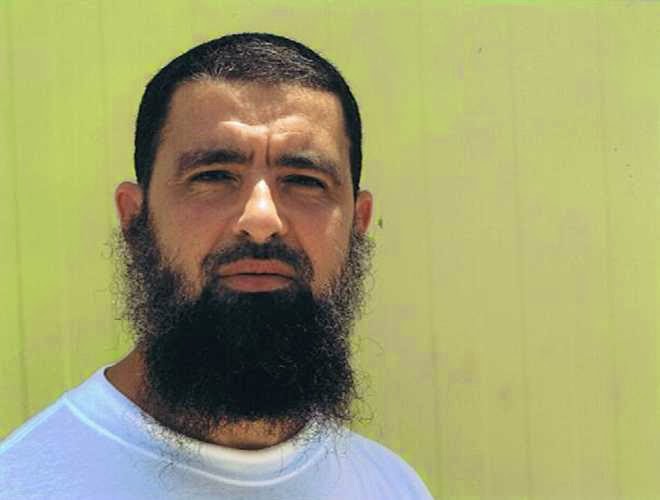
CLEARED FOR RELEASE ... because he never should've
been in Guantanamo in the first place: Djamel Ameziane
It is clearly the time for an annual dose of stealth maneuvering by our government's "national security" apparatus, led by the President.

History shows that a good time to take actions that you don't want examined too closely is the time between Thanksgiving and New Years.

Consider, for example, Obama's midnight signing of the NDAA renewal -- the National Defense Authorization Act, the one that includes "Guantanamo for everyone!" provisions -- on December 31, 2011. People looked up from their eggnog just long enough to notice that Washington was doing . . .  something or other? . . . and then  . . . back to snooze-ola.

How else to explain the most recent head fake in the direction of releasing the detainees who have been literally wasting away in Guantanamo.  The Administration tried to send two people -- Djamel Ameziane and Belkacem Bensayah -- to Algeria, when the fact is that Algeria will not be a welcoming home for those men.

Here's what -- according to the Administration's script -- is supposed to happen now:  Americans are supposed to say, "Well, we tried . . . ." and "Gee, I guess those guys are troublemakers . . . ." and "But isn't that their home . . . ?"

Instead, we need to be saying: how do we take responsibility for the injury we have caused?

Resettlement

Despite the amount of Congressional energy has been spent trying to assure that no ex-detainee from Guantanamo ever, ever, EVER sets foot in the United States, the fact is that numerous U.S. communities have recognized an opportunity and a responsibility to extend hospitality to these people who have been detained without any justification:

Tallahassee, FL: Sept 2008 - An interfaith coalition prepared a plan "to accept three Uyghur detainees from Guantánamo Bay in their community"

Amherst, MA: Nov 4, 2009 - Amherst Town Meeting approves resolution to support resettlement of Guantanamo Bay detainees to Western Massachusetts

Leverett, MA: Apr 24, 2010 - Leverett (MA) Town Meeting Approves Resolution to Welcome Cleared Guantanamo Detainees
   
Berkeley, CA: Oct. 25, 2011 - Berkeley City Council Adopts Resolution Supporting Guantánamo Prison Closure and Justice for Detainees

(I'm grateful to Nancy Talanian at No More Guantanamos for keeping me constantly updated with this and other information on the movement for justice for Guantanamo detainees.)

Now . . . when are we going to add Chicago to that list?

Therapy

CLEARED FOR RELEASE ... because he
never should've been in Guantanamo
in the first place: Belkacem Bensayah
It is vitally important that people who have been subjected to torture receive care.  Some of the dimensions of the trauma caused by torture -- in its many forms, including sustained sensory deprivation or "solitary confinement" -- and the need for care for survivors was powerfully shown in the film by local Chicago filmmakers, Beneath the Blindfold. And the critical importance of care for torture survivors was one of the factors that was stressed when the city council of Chicago unanimously passed a resolution declaring Chicago a torture-free city: "WHEREAS, torture survivors require comprehensive care and assistance, such as that provided by the Heartland Alliance Marjorie Kovler Center; and . . . . "

The Marjorie Kovler Center "transforms the lives of individuals recovering from the complex consequences of torture. Kovler Center provides medical, mental health, and social services; trains and educates locally and globally; and advocates for the end of torture worldwide." Read more about the Marjorie Kovler Center in Chicago. 

Chicago can derive pride from the fact that it provides care to hundreds of people from all over the world who are survivors of torture.  Now . . . it's time to step up on behalf of survivors of the torture that has been conducted by the U.S. government in the name of its "global war on [of] terror."

Facing our responsibility

Many of us have been working for a long time to close Guantanamo. It is a worthy aspiration. But perhaps the time has come to say that we will not be "done with" Guantanamo until we begin to do right by the people who have suffered there.

We can never expect to fully do justice to those who have been unjustly imprisoned at Guantanamo. But we can start by taking full responsibility for giving them a place to live safely, and providing world-class care.

That much we can do.

That would provide for healing on both sides.


9 More Ideas You Won't Hear

at Chicago Ideas Week . . .


Related posts

For the next three months, people will be talking about the film 12 Years a Slave and its Oscar prospects. And well they should. The film is about the experiences of the free man, Solomon Northrup, who was seized and enslaved for twelve years, and it may be the best thing ever to come along for enabling us to confront the true meaning of our history of oppression and racism in America. But it's not just about history. 

(See 12 Years a Detainee)

It is perhaps the signal achievement of the film "Beneath the Blindfold" that it portrays four different survivors, each of whose experience of torture was distinct from that of any of the others, and each of whom has an otherwise unique personality, and yet each makes clear that they share a long-lasting trauma. One leaves the film with a deeply-felt sense of the lasting trauma caused by torture of any kind.

(See The Revelations of "Beneath the Blindfold" )

 The detainees in Guantanamo are just one example of how the leaders of the United States demagogue issues of law, security, and justice in order to keep themselves in power and the rest of us in a state of fear.

(See Obama's speech on al Qaeda, drones, Guantanamo Bay: You heard it here first!)

Chicago Vocabulary Lesson: "Overcharging" and "Undercharging"

22-year-old Chicago murder victim Rekia Boyd
The State's Attorney for the Chicago area finally got around to bringing a charge against a police officer who shot and killed a citizen. Why, I wondered, didn't Anita Alvarez charge him with murder?

Then I remembered my Chicago vocabulary lesson.

In Chicago, the administration of justice is thought to depend -- at least according to the State's Attorney and CPD -- on two things called "overcharging" and "undercharging."

"Overcharging" means that anyone charged with a crime is charged with serious offenses far beyond what the situation warrants and then --

Oh wait: did I say "anyone"? I should have said "anyone with dark skin."

"Overcharging"

So ... "overcharging" means that anyone -- especially anyone with dark skin -- who is charged with a crime is charged with serious offenses far beyond what the situation warrants and then is thrown into a dungeon called Cook County Jail until they agree to a plea. "Overcharging" is greatly helped by "mandatory minimum" sentencing guidelines that mean that if people don't agree to a plea, they face crushing prison time.

Don't take it from me - take it from Cook County President Toni Preckwinkle and bestselling author Michelle Alexander. Toni Preckwinkle says, "There are people in our jails, waiting to have their cases heard, who have served more time than convicted criminals sentenced to prison." (See Toni Preckwinkle: Cook County courts need outside reformer )

And Alexander says the system is so broken that if, by some stroke of magic, people were able to contest charges against them instead of accepting a plea, the "justice" system would have a conniption. (See "Go to Trial: Crash the Justice System" )

"Undercharging"  

More data at StopPoliceCrimes.com
 And then there's what happens when police are charged with a crime.

(Admittedly, this section may not have the same statistical significance as the section on "overcharging" because the number of police in Chicago charged with crimes is ... well ... I know of one case, anyway .... )

"For the first time in more than 15 years, a Chicago police officer was criminally charged Monday in a fatal, off-duty shooting . . . ." was the lede in the Chicago Tribune account of the November 25, 2013, charging of Dante Servin in the off-duty shooting that killed 22-year-old Rekia Boyd with a bullet through the back of her head. (See Prosecutors: Detective was 'reckless' in fatal off-duty shooting)

What is startling is that the State's Attorney couldn't bring herself to charge Dante Servin with murder. They charged Servin with "involuntary manslaughter" -- which is States'-Attorney-speak for "this whole thing was just an unfortunate accident."

The facts show that Dante Servin chose to equip himself with his personal weapon - an unregistered Glock pistol ... and, after having made a call to 911 to complain about noisy people near his house, he chose to exit his house at 1 a.m. ... and he chose to confront some young people he saw near his house  ... and, after he drove his car a short distance from where he exchanged words with the young people, he chose to take out his weapon ... and he chose to fire his weapon at them.

And he killed someone.

The murder was certainly a "mistake" but it is asinine to suggest that there was no "intent."

Any prosecutor worth his or her salt would set out to make the case that Dante Servin set out to threaten violence against other citizens and that he followed through on that threat. So what does that make it? First degree murder? Second degree murder?

Maybe the place to start is: how would Dante Servin be charged if he were getting the standard Chicago "overcharging" treatment, instead of getting a pass?

Related posts

A campaign exists to bring about a democratically-elected Civilian Police Accountability Council (CPAC) in Chicago. The campaign would involve the people in electing the watchers of the police, and put the ultimate control of (and responsibility for) the police in the hands of the citizens of Chicago.

(See Does a Civilian Police Accountability Council (CPAC) need to be part of a "new plan of Chicago"? )


In the city where I live, "normal" or "right" or "acceptable" has been given a brutal construction by the power structure:

Police encounter black man on street
Police shoot black man
Black man dies
(Business as usual in Chicago.)

 (See We need to get the police off the streets of Chicago. QED.)

 Cook County Jail is the perfect example of the nationwide injustice that Michelle Alexander described in her groundbreaking book, The New Jim Crow: mass incarceration, focused principally one people of color, in which "crimes" (often related to drug possession or other low-level offenses) become the mechanism for entrapping people in a cycle of incarceration that is brutalizing and often begins a downward spiral of lifetime discrimination.

(See Free Them All )


All the cameras and microphones and reporters were out in force that day -- and their appearance suggested to me that it does make a difference to take a stand for justice. And maybe the fact that some of us thought this was important enough to come out, hold signs, chant, and march, helped back up that message.

(See Chicago Justice: Connecting the Dots )

Monday, December 9, 2013

Surveillance and the Tech Companies: THE JIG IS UP!

Major tech companies have put out a clarion call today: Reform Government Surveillance! AOL, Facebook, Google, LinkedIn, Microsoft, Twitter, and Yahoo have discovered that the public is fed up with being spied on and know exactly where to point the finger: the government.

However, before we fall into a swoon over how the wonderful tech sector is looking out for our interests, we should first face up to the primary responsibility of the tech sector for creating the problem.

For a great primer on the data management that makes these companies hum -- and how that way of doing data management  inevitably cries out to be used for surveillance -- watch Terms and Conditions May Apply. This documentary is so fundamental to understanding what's happening today with the destruction of privacy and the empowerment of the government to conduct blanket surveillance that very soon we are all going to be talking about it. Let's just call it "TACMA."

The big thing I took away from TACMA is that the Rubicon was crossed when Google and others figured out that they would never be able to make money -- REAL money -- if their data management protocols shielded the identities of individuals. So they "reluctantly" backed away from such a limitation.

As anyone who has ever noodled with a spreadsheet knows, once the "key" to the individual is linkable, it's a free-for-all.

The government certainly has to clean up it's act.  But if we're going to make any progress on stopping surveillance in 2014, we're going to have to take on the tech companies themselves.

Related links


One issue that has a key place in the midterm elections in 2014, I believe, is surveillance.  With each passing day, I am hearing more and more people say that the surveillance issue is something that a wide spectrum of people are deeply upset about. That includes people on the right as well as people on the left -- people who don't usually talk with each other, much less work together for positive change!

(See The Surveillance Issue: The Fulcrum of the 2014 Election?)


Edward J. Snowden has forced us to confront what we all knew already: our government is running wild and we can't get our privacy back, short of some kind of very extreme change . . . . We have a problem with our government. It sees opportunities for power in every bit and byte of our personal data, and it's time to call it what it is: wrong.

See Fed Up With Being Spied On


There has been a good sign in 2013, in that many people have become outraged about government surveillance. A recent Pew poll found that Americans are now more worried about civil liberties abuses than terrorism. I believe a big question in 2014 will be whether challengers successfully address the issue of NSA surveillance in their campaigns.

(See What Will Election 2014 Boil Down To? )

Wednesday, December 4, 2013

UN Drones Over the Congo: BAD IDEA!

Ban Kyi-moon announced United Nations plans to acquire drones several months ago. There are now reports that the UN has deployed drones in the Congo, in the area near Rwanda. (See Reuters, U.N. forces use drones for first time, in eastern Congo)

This is a bad idea for at least three reasons.

First, the UN has a conflict of interest over drones.

There is a demand on the table that the United States, at a minimum, provide a full accounting of all its drone attacks, preparatory to an evaluation of the criminal nature of some or all of those attacks.

It is not possible for the UN to forcefully press its case for US drones accountability at the very same moment that it is joining the "drones club."

Second, "just a few" UN surveillance drones will be the foot-in-the-door for US drone warfare down the line.

Remember, the UN doesn't have troops of its own; the minute there is talk of "UN peacekeeping" that really means the introduction of the military forces of one or more member states -- usually the US.

The United States is rapidly expanding its military involvement in Africa. The UN should give it neither pretexts or platforms for that involvement.

The Congo is a place that the United States would like to gain leverage over -- ideally under the guise of third-party activity. (See the map by Nick Turse, and read more about US expansion in Africa in Mother Jones, "The Startling Size of US Military Operations in Africa".)

Third, surveillance isn't "harmless."

Photo: Reuters, U.N. forces use drones for first time, in eastern Congo
Drone surveillance, like drone injury, is part and parcel of an overall phenomenon of watching, recording, categorizing, judging, disrupting, injuring -- amounting to a war on communities of color.

It is time for the United Nations to take a hard look at this broad phenomenon, and the specific role of drones in it.


We need to speak up against the expansion of the drone wars into the Congo.


Related posts


To those of us who have worked hard to get U.S. troops out of Afghanistan, it is flabbergasting to see reports that U.S. officials see a "need" for someplace else to send troops and material: apparently, there's no such thing as demobilization, only re-deployment.

(See AFRICOM: The Heart of Darkness)


A new U.N. report makes it clear that the U.S. has to report fully on all its drone attacks.

(See 2014: The Year of Transparency (for U.S. Drone Use)?)


The biggest idea coming out of the 2013 Drone Summit? We will only deal successfully with the crimes being committed using drones when we understand them as part of the much larger war against communities of color . . . .

(See Drone Gaze, Drone Injury: The War on Communities of Color )

Friday, November 29, 2013

Honduras Election: What Happened? What Responsibility Does the U.S. Bear?

I can still remember exactly where I was standing during the phone call.  I was in Milwaukee, Wisconsin, finishing up a consulting assignment. I was in the shopping arcade attached to the Pfister Hotel, about to go to dinner and relax.

One of my best friends from my childhood in New Jersey was calling to tell me with pride and also concern that his daughter was going to Central America to do research.  Sarah was about to write her senior thesis, and she had gotten funding to go to Honduras to do interviews. John told me about the experienced people who were helping her make sure her work in Honduras would be productive but also safe. I could feel him vacillating between immense admiration for her priorities and what she was trying to do, and fear that something might happen to her.  And it was complicated by the difficult decisions of a father of a grown child: Do you say everything you are thinking? How do you balance responsibility and respect?

I told John how important I thought Sarah's work was. I told him about my own nephew and his wife, who had both served in the Peace Corps in Nicaragua, and about how they were both working now in the health field in Chicago. I reminded him that Sarah had spent a year in Argentina, so this wouldn't be her first time in Latin America. I joked that it was natural that our kids were going to be a lot more adventuresome than we had been, coming out of little ol' Chatham, New Jersey. But I stopped short of saying that I was sure there was nothing to worry about, because I knew that wasn't true.

Recent history:  The Coup of 2009

That conversation was taking place in the wake of a coup that overthrew the democratically-elected president of Honduras. At the time, I was aware that there were "difficulties" in Honduras: the president had had to escape the country, it seemed to be a coup, there were some kind of elections after that, but things still seemed up in the air . . . .  I didn't understand much more than that. (For more background, check out the article on the 2009 Honduras political crisis on Wikipedia.)

The immediate upshot of that telephone call was that everything turned out fine with Sarah's research trip: she successfully completed her thesis and is now in a graduate program in Albuquerque, focusing on Latin American affairs and public health.

Another upshot of that telephone call is that I got a clear message.  "This young woman is showing me what it means to see something important that needs to be done," I thought, "and she's structuring her life so that she can do something about it." What would it mean if I did that?

Accompaniment in Honduras

So now I've been called to action -- in a lot of ways you can learn about by reading this blog. One part of that means learning about Honduras, and the way events there and elsewhere in Latin America have been shaped by the hand of the United States.

A number of friends have participated in accompaniment programs in Honduras. The idea is that people from the U.S. and other countries need to go and witness what is happening there. It is hoped that there presence my do something to inhibit the brazen attacks against ordinary people. (You can support their work there: Donate to Defend Human Rights in Honduras)

One of those friends is Andy Thayer. For instance, in the fall of 2012 he traveled to Honduras on a fact-finding mission with Chicago-based La Voz de los de Abajo. His conclusion? "The government doesn’t respect its own laws, the judges are bought and sold by the few who can afford them, and all this is done to increase the power and wealth of that country’s 1%. And [the Obama] administration makes it worse by supporting this with guns and more guns."(See "An Open Letter to Barack Obama: Mr. President, You Are Abetting Murder in Honduras")

Most recently, Andy has gone to work with others to monitor the elections in Honduras, as part of the Honduran Equality Delegation, the first LGBTI-focused delegation to Honduras. Below are video links he has shared; the photos on the post are his as well. As Andy provides additional information, I will update this post.

(At this writing, the BBC is reporting, "[Juan Orlando] Hernandez, of the conservative National Party, won 36% of the vote, with results from 81.5% of polling stations tallied. The left-wing candidate Xiomara Castro won 29%, but she disputes the outcome." See "Honduras election: Hernandez declared winner".)

UPDATE NOVEMBER 30: From Andy Thayer:
Libre Party press conference going on right now, confirming many of the things our delegation observed and learned from witnesses in the polling places where we observed. Dead people voting, live people being declared dead and yet very much alive, and not being allowed to vote.

From the press conference:

30% of votes were by dead people or those who had emigrated from the country;

Roughly 10% of the election judges from the small parties were bought;

The biggest amount of fraud occurred in the transmission of votes from the voting "precincts" to the center, where the role of the bought judges was critical.

Libre Presidential candidate Xiomara Zelaya has just stepped up to the podium. "We do not recognized the legitimacy of any government which is a result of the fraud. We have evidence of the fraud that occurred on Nov. 24th."

How is it that a candidate who led easily in virtually every poll suddenly "loses" by 7%? It doesn't take a rocket scientist to figure out what went on....
Elections in Honduras - The Video Record

Andy Thayer has provided these videos from the election in Honduras:
LGBT in Honduras

Andy Thayer (center) with legendary Honduran
LGBT leaders Pepe Palacios (right) and Erick
Martinez (left). (Tegucigalpa, Honduras)
Election night with Presidential Candidate Xiomara Castro de Zelaya

Military Intimidation of the Media During Honduran Elections
One thing that Andy Thayer and other activists have helped me do is to understand the connectedness of injustices being experienced by people in diverse places, under diverse pretexts; and to see the way U.S. government actions form a common thread in those injustices.


Photos courtesy Andy Thayer. See full "Honduras: Day after stolen elections" photo album on Facebook.


Related posts

Diverse places, diverse pretexts . . . We will only deal successfully with the crimes being committed in places as disparate as Honduras and Pakistan and the South Side of Chicago when we understand them as part of the much larger war against communities of color . . . .

(See Drone Gaze, Drone Injury: The War on Communities of Color )


Is the School of the Americas (SOA) model now being transferred to Afghanistan? The SOA model is to use U.S. money and ideas to enable power holders in another country to persecute and kill ideological enemies, while denying that the U.S. is engaging in violence in that country, much less exposing U.S. combat troops to violence in that country, and making every effort to disavow the consequences of U.S. guidance of the violence (and crimes) being carried out in that country.

(See Is the SOA Coming to Afghanistan?)


Sometimes solidarity means taking to the streets where you are.  (And sometimes doing so reminds you to stick up for your own rights, as well.)

(See Can Chicago Walk Like an Egyptian?)


Tuesday, November 26, 2013

12 Years a Detainee

For the next three months, people will be talking about the film 12 Years a Slave and its Oscar prospects. And well they should.

The film is about the experiences of the free man, Solomon Northrup, who was seized and enslaved for twelve years, and it may be the best thing ever to come along for enabling us to confront the true meaning of our history of oppression and racism in America.

But it's not just about history. How many viewers of the film will gasp and realize that the kind of kidnapping and living entombment depicted in the film isn't just limited to the America of our forebears?

Extraordinary Rendition

One minute he is with his family, and the next minute he is in chains.

Of course, this is the reality of every victim of American slavery. The peculiar hell of the protagonist of 12 Years a Slave, Solomon Northrup, is that he thinks he lives in a time and place where it can't happen to him.

The portrayal of the kidnapping of Solomon Northrup matches the practice of "extraordinary rendition" by which the U.S. government has snatched people in countries all over the world and carried them outside the reach of help, or of the law. Many of those people still languish in Guantanamo.

Dehumanization

12 Years a Slave is as much about the captors as the captured.

Everyone is dehumanized.

The most over-the-top character is the crazed slaveholder Epps. Perhaps the most calculatingly evil is the slave dealer Theophilus Freeman; slaveholder William Ford the most pathetic, carpenter John Tibeats the most despicable.  But the character that I found most compelling was the overseer who saves Northrup from lynching one minute, and yet the next has walked away leaving him dangling on the edge of suffocation. What is going on?

Everyone is embedded in the cruelty; everyone is complicit. ("Just doing my job.")

How many Americans -- at all levels -- have been dehumanized by their complicity -- directly and indirectly -- in the renditions, detentions, torture, killings, and other acts carried out by the U.S. government in our name in the "global war on terror" since 9/11?

Can We Act?

Brad Pitt plays a humane, indepdendent, and -- ultimately -- courageous white (Canadian) laborer, Samuel Bass. He has the two best lines in the film.

The first is when Bass tells the menacing Epps, "The law can't make a person a slave. The law could change tomorrow and make you a slave. That wouldn't mean that it was true."

The second is Bass' response to Northrup's request for help. "I'm afraid."

It is that second line that I can't get out of my mind. Is it possible that even heroes come to the rescue only after facing down their own fear?

Who is willing to stand up in America today and say,  "The law can't make a person an indefinite detainee. The law could change tomorrow and say you should be an indefinite detainee. That wouldn't mean that it was true" ?


The 2014 Oscar season, during which so many people will be talking about 12 Years a Slave, coincides with the 12th anniversary of the establishment of Guantanamo Bay Detention Center: the place America uses to demonstrate that even today it can seize anybody it chooses and pack them away indefinitely, dangling between life and death.

I can't help believing that the producers of 12 Years a Slave are sending us a message: "This is about today. Act."


Related posts

My most prominent memory of my first viewing of the Guantanamo film, The Response, is of one of the stars of the film -- Kate Mulgrew of Star Trek fame -- participating in a panel after the screening. I was blown away when she said, "I did this because our civil liberties in our country have been gravely damaged and we all need to contribute to repairing them."

(See Understanding What Guantanamo Means)


We all wish to be judged by our good intentions. But the way people know us is through our actions. So ... what do people in the Muslim world know about us here in the United States?

(See They'll Know Us By Our Actions)


Make no mistake: the powers that be have know that they have cowed most of the public into being afraid to talk about Guantanamo, and that suits them just fine. Our power to act starts with talking widely -- beyond just our usual circles -- about the way in which we're being scared ... and why a government would possibly want to scare its own people.

(See Pentecost, Guantanamo, and the Moment When Talk Becomes Priceless)

Sunday, November 24, 2013

What Would a Global Movement to Ground the Drones Look Like?

The 2013 CODEPINK Drones Summit has made it clear to me that the global movement against drones is happening.

I opened my computer this morning to see this image:

Imran Khan addressing a massive crowd at the #PakistanAgainstDrones
protest at Peshawar yesterday. (Photo via @AhmerMurad)
This is a rally in Pakistan to stop US drone killings. (In fact, it has morphed into a movement to resist NATO military operations in the region.) Many of us who weren't in Pakistan participated in this protest by holding rallies where we were (for instance, in London), or by participating virtually via the #PakistanAgainstDrones campaign on Twitter.

A huge turnout outside the US Embassy in London. (via @SorayaAziz)
The New York Times gave front page coverage yesterday to the testimony of Faisal bin Ali Jaber from Yemen when he came to Washington, DC, to tell people first-hand about US drone strikes killing peacemakers in his home country.

Faisal bin Ali Jaber (NY Times)
Of course, some activists have an easier time getting a hearing than others.

Malala Yousafi at the White House: “I also expressed my concerns that
drone attacks are fueling terrorism. Innocent victims are killed in these
acts, and they lead to resentment among the Pakistani people. If we
refocus efforts on education it will make a big impact.”
(Source: ThinkProgress)
The CODEPINK summit itself, in addition to hosting Faisal and his colleagues, brought forward the voices of speakers from Pakistan and Afghanistan. In addition, we learned about the efforts of activists in Germany to resist the US drone command center there that focuses on Africa. And, of course, we heard about the great work of Drones Wars UK to resist British drone militarism, particularly in Afghanistan.


So . . . where else in the world is the movement against drones taking off?

Related posts

Five big realizations I'm taking away from the 2013 CODEPINK Drone Summit "Drones Around the Globe: Proliferation and Resistance" in Washington, DC.

(See The 2013 DC Drones Conference: 5 Big Takeaways )


The biggest idea coming out of the 2013 Drone Summit? We will only deal successfully with the crimes being committed using drones when we understand them as part of the much larger war against communities of color . . . .

(See Drone Gaze, Drone Injury: The War on Communities of Color )

A new U.N. report makes it clear that the U.S. has to report fully on all its drone attacks.

(See 2014: The Year of Transparency (for U.S. Drone Use)?)